
While the legacy of the 2025 NHL Draft class remains to be seen, one thing is clear: the 2024–25 season marked a seismic shift in North American amateur hockey.
In November, the NCAA Division I Council approved a rule change allowing players from Canadian Hockey League (CHL) teams—previously barred under Bylaw 12.2.3.2.4—to retain NCAA eligibility, provided they are not compensated beyond actual and necessary expenses. The new rule takes effect August 1, 2025.
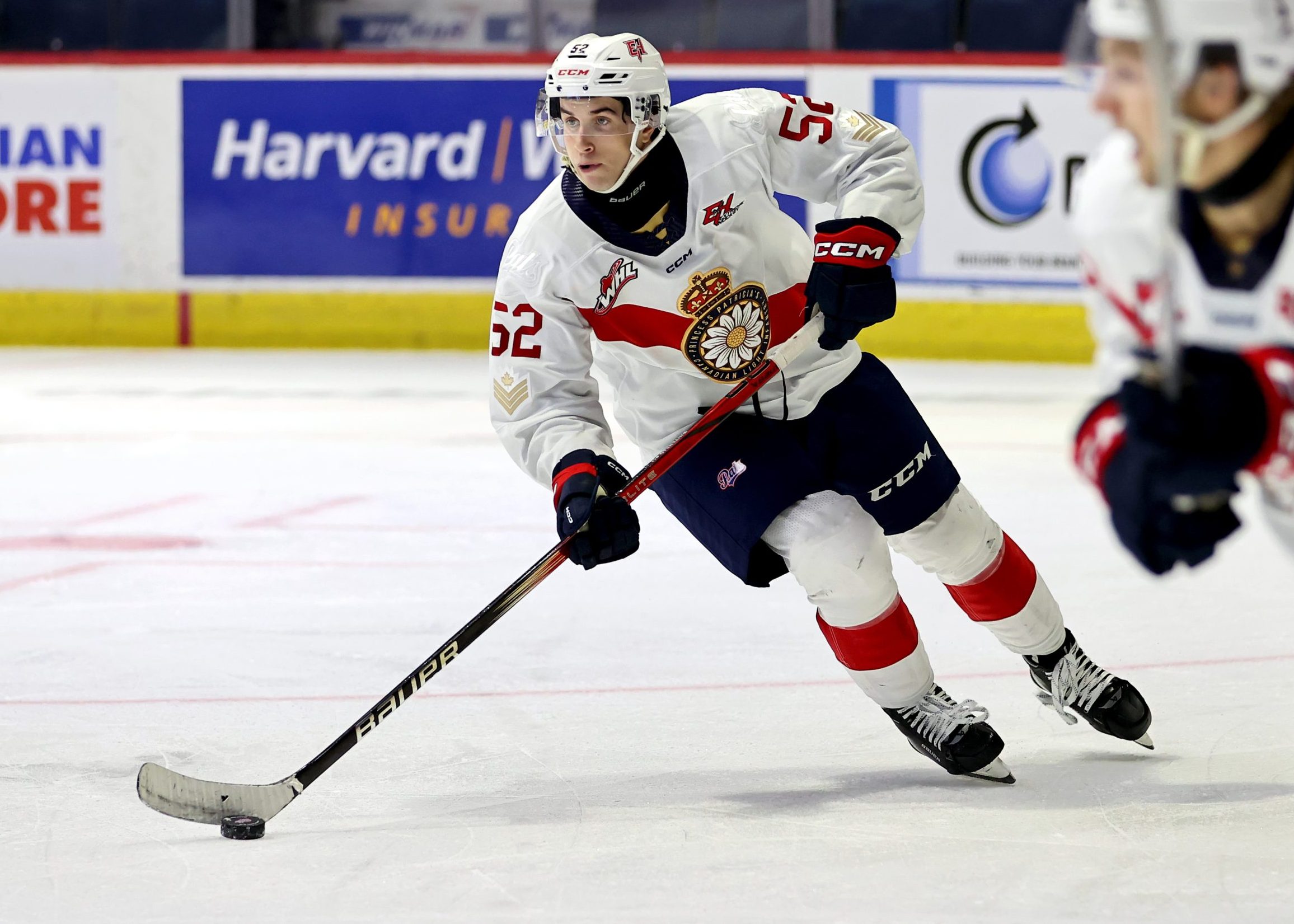 This legislative overhaul triggered immediate movement. On September 13, Braxton Whitehead of the WHL’s Regina Pats became the first CHL player to commit to an NCAA program under the new rules, joining Arizona State. The 21-year-old overager is now part of a growing trend.
Since then, dozens of undrafted or unsigned 20- and 21-year-old CHL players have followed suit.
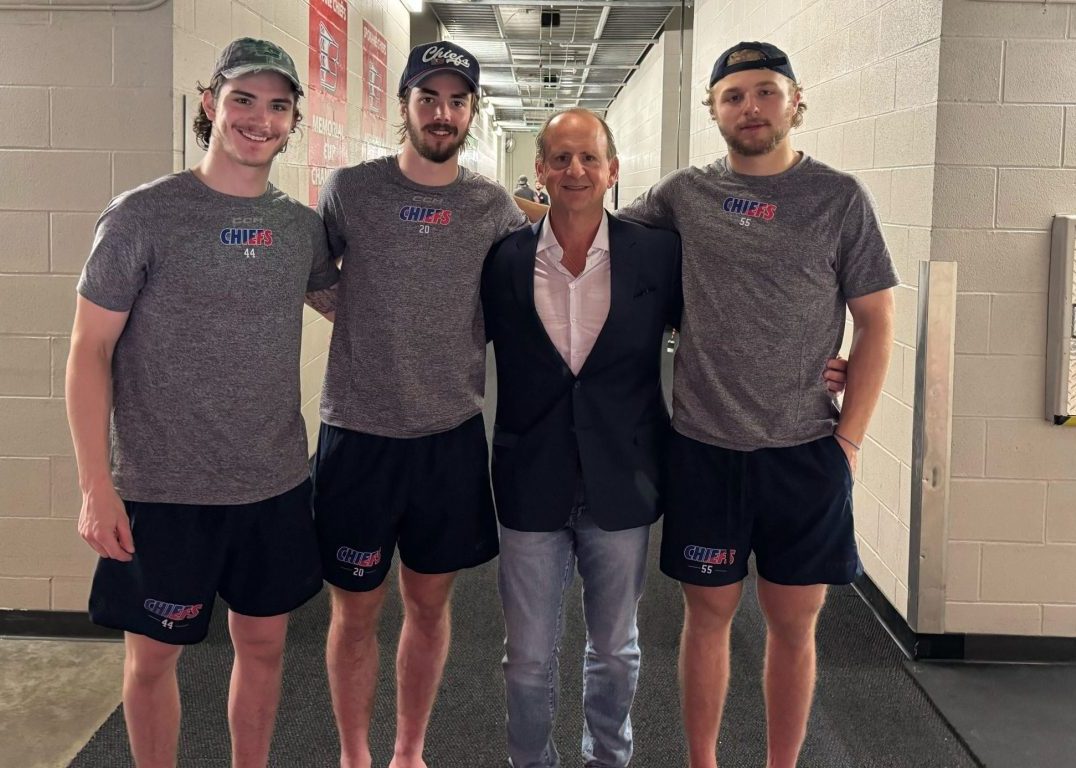 Scott Norton with L-R Sage Weinstein, Shea Van Olm, and Sam Oremba
Scott Norton, President of Norton Sports Management, is an NHLPA-certified agent with over three decades of experience. In January, he helped overage WHL forwards Shea Van Olm and Brandon Whynott in their recruitment to NCAA programs.
For players like Whitehead, Van Olm, and Whynott, the NCAA offers an established path to the NHL through free agency.
“Prior, they had USports in Canada, which in itself is pretty good hockey, but it’s not the year-round development that the NCAA has,” Norton explained. “They don’t have the finances that the NCAA puts into the programs and the off-ice development that the kids in the U.S. side get. That’s really where the difference is, and that’s why, for years, the NHL teams have looked at free agents in U.S. colleges.”
Van Olm, who led the WHL with 49 goals in his final season, brings 261 junior games of experience to Penn State. According to Norton, the NCAA’s lighter schedule could allow players like Van Olm to emerge stronger, faster, and more NHL-ready.
“What teams are looking at with a player like Shea is, ‘we’re gonna take this player that’s made so many strides in the last couple years in the same hockey league, and we’re gonna get an extra couple, two to four years to look at him maybe 15 to 20 pounds heavier, that much faster, and more mature,” he said.
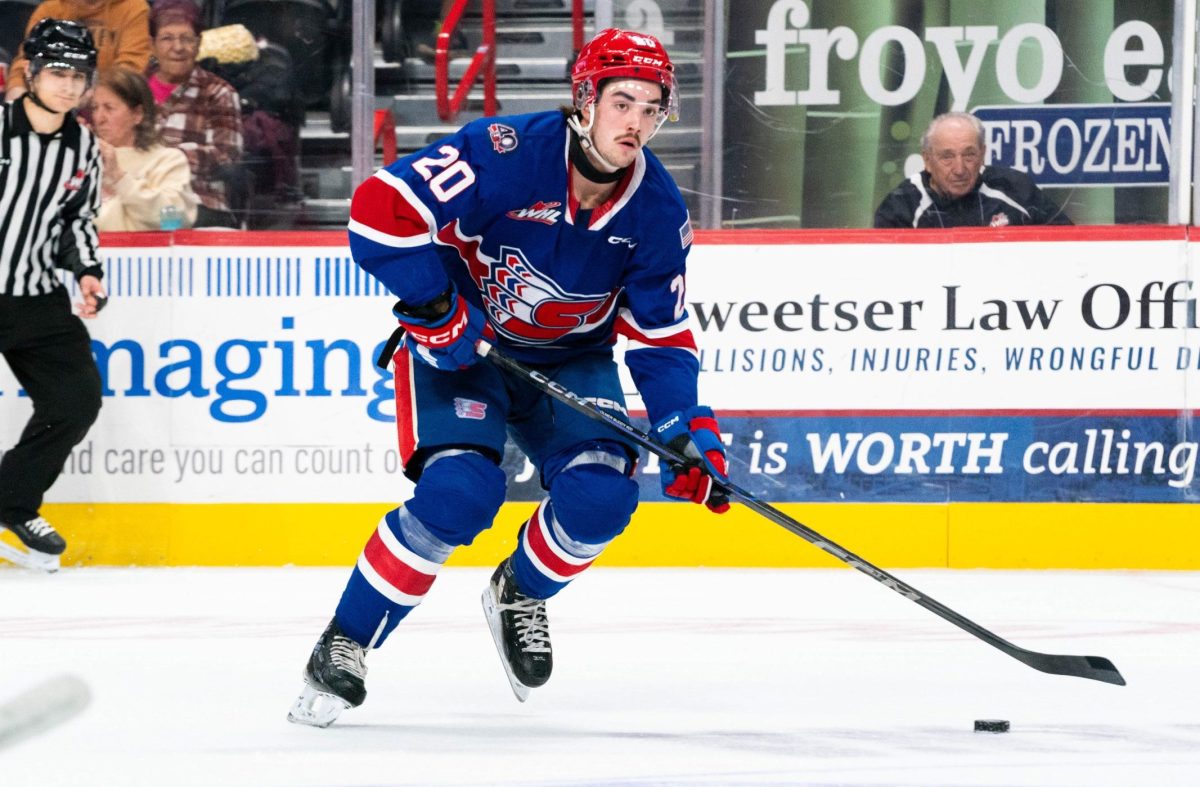 The rule change has also sparked movement in the opposite direction. Several players departed the NCAA’s feeder leagues (i.e. OJHL, AJHL, and BCHL) in favour of the CHL. Top 2026 NHL Draft prospects Adam Valentini, Callum Croskery, Zach Nyman, and Caleb Malholtra—all projected first rounders that slipped in the 2024 OHL Draft due to NCAA ties—have signed with OHL clubs this offseason.
While Canadian stars like Toews, Power, Makar, and Fantilli have long excelled in the NCAA, the CHL is quickly becoming a launchpad for college-bound talent, potentially at the expense of Tier II leagues and the USHL.
In April, Henry Mews of the Sudbury Wolves became the first CHL player with junior eligibility remaining to jump to the NCAA, joining the University of Michigan. He’ll be joined by Erie Otters forward Malcolm Spence, currently ranked 33rd in the 2025 NHL Draft.
 Perhaps the biggest name to switch so far is Jackson Smith, the No. 7-ranked prospect in this year’s draft. The 18-year-old leaves the WHL’s Tri-City Americans for Penn State.
All eyes now turn to 17-year-old phenom Gavin McKenna. The reigning CHL Player of the Year is widely expected to spend his draft year in the NCAA. It’s not a matter of if, but when—and where.
It’s unclear what the long-term impact of the current changes will be. Across junior, college, and NHL circles, the prevailing sentiment is simple: we’ll have to wait and see.
“The ramifications, I don’t think even the smartest person has any concept of yet at this point,” Norton explained. “There are so many implications that go beyond what we’re thinking now, as well as the trickle down to how it affects the other junior leagues.
Not all 17- and 18-year-old players are going to find immediate success or consistent ice time in the NCAA. How many will hurt their draft stock by spending their draft year in college hockey, rather than the CHL, where they might receive more ice time and responsibility? How many will return to the CHL next season, realizing the grass isn’t always greener on the other side? The answers remain to be seen, but disappointment seems inevitable for some.
Another question: could we see a team up? That is, a formal or informal affiliation between an NCAA program and a CHL team, with the latter operating as a feeder. CHL boundary rules complicate this, but what if, say, the Saginaw Spirit began working closely with the University of Michigan to funnel OHL-bound recruits? Or the Brandon Wheat Kings with the University of North Dakota for WHL prospects?
For us at McKeen’s, the most pressing question is this: what becomes the optimal pipeline for player development? Or is there even such a thing anymore?
 McKeen’s Director of Scouting, Brock Otten.
“This has the potential to alter how we evaluate players,” says Brock Otten, McKeen’s Director of Scouting. “How much weight will be given to NCAA performance versus CHL production? If a draft-eligible player is scoring 0.5 points per game in a strong NCAA program, will he rank higher than someone putting up a point per game in the CHL? It’s hard to say. Scouting has always been about projection, not just production. But projection becomes harder when players aren’t put in positions to succeed and show off their skill sets”
USports—the Canadian equivalent of the NCAA—is expected to take an immediate hit in recruitment. Many top CHL free agents will now opt to extend their playing careers in the U.S. college system instead.
The USHL is also under pressure, losing both Canadian and European talent to the CHL, as well as some top American prospects.
But does this truly hurt the CHL? Opinions are split. Some argue it does. Others say it’s not a decline, but a transformation. The CHL has already adapted, allowing teams to dress three import players—an adjustment some clubs will exploit to bring in elite European talent.
We’re also seeing more younger American players choosing the CHL route. The quality of 17- and 18-year-old talent in the league has risen noticeably. If the current group of NCAA-bound trendsetters finds success, we could see more 19 and 20-year-olds making the switch in future years. Even so, the CHL will maintain a high level of talent—likely younger, but still highly competitive.
What remains to be seen is how this shift will truly impact player development. What we do know is this: the choice now belongs to the player more than ever.
“I used to sit with a family when the player was 14 and say, ‘Do you want to go to college—develop as a pro and get a good education? Or go the CHL route and push all your chips in on becoming a hockey player?’” said NHL agent Scott Norton. “Academically, the new rule makes that decision a lot easier.”
Prospects no longer have to choose between the “pro-style” lifestyle of major junior and the NCAA’s structured, year-round development model. But that doesn’t mean everyone will follow the new CHL-to-NCAA pathway.
“I’ve talked to high-ranked and already-signed CHL players who said they wouldn’t have even considered the NCAA,” Norton added. “They like the lifestyle. They like playing a lot of games. They like not having to worry about school. Not every 17-, 18-, or 19-year-old wants to split his time between trying to become a pro and studying for a chemistry test.”