

One of the questions consistently asked of us on social media is “who are your favourite sleepers this year?” The concept of a draft “sleeper,” or a player currently flying under the radar is something that fascinates many draft followers. Everyone has their favourite, so we asked our scouting team to supply theirs!
Brock Otten – Director of Scouting
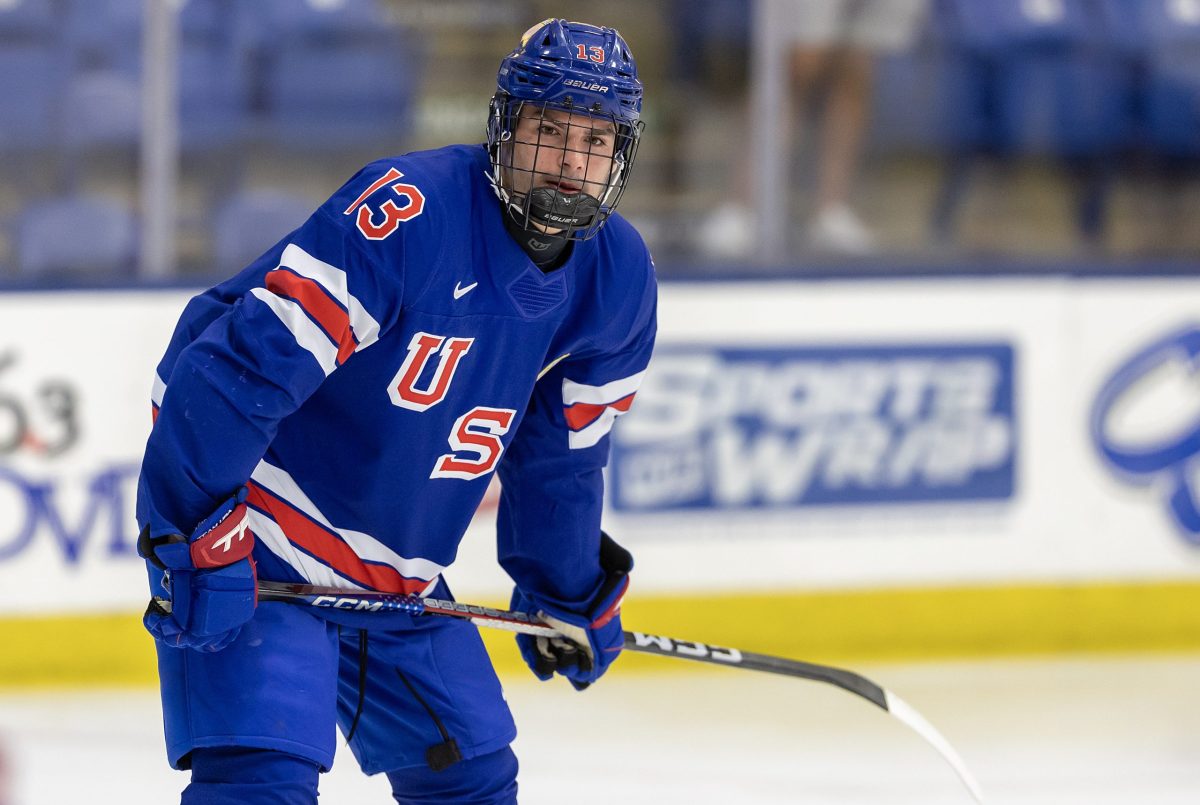 Asher Barnett. Photo by Rena Laverty
Asher Barnett – D – USN U18 (USDP) – MCKEEN’S RANK – #160
For a large part of the year, I felt that Barnett was the NTDP’s most reliable defender. It’s part of why he was selected as the U18 captain. I’m not sure his upside is incredibly high, but I think his mobility and two-way sense are good enough for him to develop into a useful third pairing defender in the future; the kind of guy who can help anchor your penalty kill and play 16-17 minutes a night without hurting you. In the middle rounds, you’d be happy to get that kind of organizational depth.
 Charlie Paquette – RW – GUELPH (OHL) – MCKEEN’S RANK – #192
One of the best players in the OHL in the second half of the season. Through the last 40 games of the year, he had 30+ goals. He’s long been a player with significant scoring upside thanks to his size, skill, and better-than-average skating ability, but consistency has been an issue. In his last year of draft eligibility, he finally put it all together and is a very worthy NHL draft selection. There is a path to the NHL for him as a middle-six winger so long as his game continues to develop.
Derek Neumeier – Associate Director of Scouting
 Vincent Desjardins – C – BLAINVILLE- BROISBAND (QMJHL)- MCKEEN’S RANK – #159
Desjardins went undrafted in 2024, and some teams must be kicking themselves about that now. He exploded offensively this year and even comfortably ended up with the most power-play points in the QMJHL. He’s a center with playmaking ability that is borderline elite, especially his ability to make no-look, tape-to-tape passes. Even though he’s pretty light and not a burner, he’s still effective in his defensive duties because he’s so positionally sound. When a prospect can make so much progress from one year to the next, that’s a great sign they’ll be able to make other necessary improvements as they continue developing.
 Carter Klippenstein – C – BRANDON (WHL) – MCKEEN’S RANK – #229
It’s incredibly difficult to find future stars in the later rounds of the draft, so scouts also need to be on the lookout for prospects who could become valuable role players. That’s Klippenstein in a nutshell. The big, athletic center is already a polished shutdown forward. He’s a smart penalty killer, he covers a lot of ice with his skating and reach, and he has some general hardness to how he plays. If he can keep mastering the kind of role he’s playing now, then he’ll keep improving his chances of being asked to do it in the NHL one day, too.
Regional Scouts
Ryan Miller – C – PORTLAND (WHL) – MCKEEN’S RANK – #132
There are very few players outside the top of this draft that match Miller’s pace and tenacity. He sprints up and down the ice to ensure he’s engaged in the play and never backs down from puck battles. He gives defenders fits on the forecheck and hustles to tie up sticks and strip pucks on the backcheck. Coaches love guys who play their brand of hockey. His infectious energy level fits the profile of a bottom-six forward at the NHL level, and he has room to grow his game offensively. – Kyle Dalla Zanna
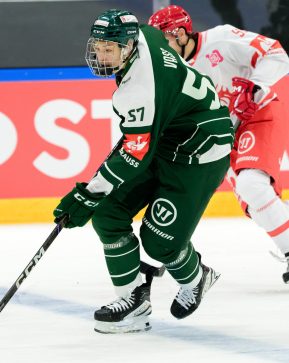 Malte Vass of Färjestad
Photo: Fredrik Karlsson / BILDBYRÅN
Malte Vass – D – FARJESTADS (SWE J20) – MCKEEN’S RANK – #142
I love Vass as a long-term project. Big, mean, and strong. Eager to punish puck carriers skating down his side of the ice. Decent defensive reads that will only get better with reps. Beautiful, long skating strides. Even though his straight-line speed and acceleration need work, he’s got a lot of headroom for growth. He won’t give you much, if any, value offensively, but that’s not what you’re drafting him for. You’re drafting him so he can slot into your bottom four in five years and make your opponents’ lives miserable, especially come playoff time. Well worth the gamble in the mid rounds, if you ask me. – Felix Robbins
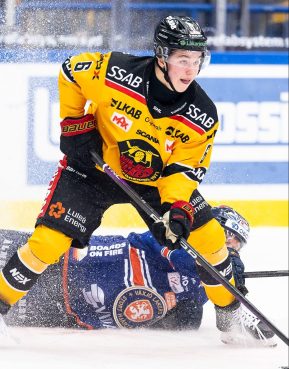 Luleås Isac Hedqvist
Photo: Jonas Ljungdahl / BILDBYRÅN
Isac Hedqvist – C – LULEA (SHL) – MCKEEN’S RANK – #276
As a D+2, you have to really impress to get drafted, and Isac Hedqvist has done exactly that. I felt like he was one of the best draft-eligible prospects playing in the SHL and brought consistent play through his great forechecking game. He showed improvement throughout the year and was playing his best with Luleå in the playoffs, contributing to clinching the gold. His feet are always in motion; he is tenacious on the forecheck and can also bring some offense through his blue-collar type of play. There is legit bottom-six potential with Hedqvist, and grabbing him in the later rounds should be great value for any team. – Simon Johansson
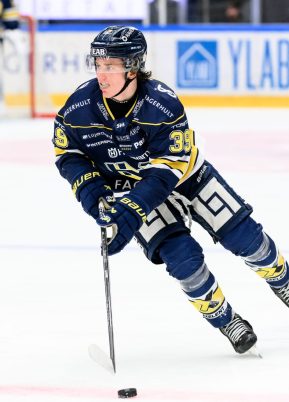 HV71s Jamiro Reber
Photo: Carl Sandin / BILDBYRÅN
Jamiro Reber – C – HV 71 (SHL) – MCKEEN’S RANK – #146
We have no qualms in pointing out that Reber is one of those talents who can disappear in the production department for stretches at a time. Also, until this season, his 5-foot-10 and 176-pound frame really looked to be more on the smaller side. And then there was an inability to show up for his native Switzerland in three straight major tourneys after being highly impressive at the U18 Worlds and the ensuing Hlinka Gretzky Cup in his DY-1. But the young man has the wits and wherewithal to generate offense and surprised many by becoming an SHL regular this season, often gaining upwards of 15 minutes of TOI throughout the season. Then he played a considerable scoring role (4 points in 6 games) in helping his team retain the class for another year of SHL hockey in the relegation round. The cherry on top of his 10 goals and 19 points in 53 total SHL games is that he did it all as an 18-year-old. With a September 4th birthday, he’s one of the absolute youngest overagers in this draft. Heck, we wouldn’t blame anyone for seeing him as a poor man’s Marco Kasper. – Chapin Landvogt
Timofei Zhulin – LW – BARS KAZAN (VHL) – MCKEEN’S RANK – #250
Timofei Zhulin has been one of my favourite players over the past few seasons. He is a high motor player who checks all the boxes for me, getting it done on both sides of the puck. He is a talented puck carrier who uses his pace to beat opponents and can finish in a variety of ways with skilled hands and a heavy shot. Defensively, he breaks down opponents with harassing forechecking and board play. He battles hard and doesn’t give up on plays easily. He is the exact type of player I would be looking to draft if I were in the GM chair, and I was surprised to see him passed over last season. He is a hard-working grinder who has the skill and speed to create offense when needed. – Henry Lawrence
Jere Somervuori – LW – HIFK (FIN-U20) – MCKEEN’S RANK – #140
Jere Somervuori is the type of player that coaches like because you know what you are going to get from him every night, and wherever he is put in the lineup, he will show the same intensity and engagement level on 200 feet. Somervuori was on one of the best lines in the U20 SM-sarja this season with Matias Vanhanen and Jasper Kuhta. Even if he produced fewer points than his linemates, he was clearly the driver of his line because of his effectiveness on the forecheck and his ability to force turnovers and create space for his teammates. He skates like a breeze, and he is always in motion, trying to find open space or giving support for his teammates. Somervuori is very tiring for the opponents because of his tenacity, and he never gives up on plays. This is the kind of player who can make an impact in the playoffs, as he will do every little detail to help his team win, no matter what the score is. – Jeremy Rivet
 Maddox Labre – D – VICTORIAVILLE (QMJHL) – MCKEEN’S RANK – #187
Playing for the worst team in the QMJHL this season, the Victoriaville Tigers, it was hard to evaluate Maddox Labre’s game. Labre is a raw offensive defenceman who possesses great skills and puck control. He was starting to be more and more confident toward the end of the season, showing smart and crafty plays. His defensive numbers were bad, but the team in general was. Offensively, in his last 18 games, he scored eight of his 19 points total, approaching 0.5 points per game. He still has a lot to refine in his game, especially his defensive game, but the interesting potential needs to be considered, and he could get drafted sooner rather than later. – Jeremy Tremblay
 Anders Miller – G – CALGARY (WHL) – MCKEEN’S RANK – #167
In many ways, you could easily make an Anders Miller comparison to Hampton Slukynsky. Miller’s biggest drawback is that he is seen as “unproven” due to his role as a tandem with Calgary joining the team midseason. You can easily draw that comparison to Slukynsky, who was picked out of the USHS-MN, a notoriously unpredictable league to draft from, but he still made a fourth-round selection due to his strong visible skill set. Miller isn’t the flashy type of goalie; he’s someone who’d likely go under the radar to most people with an untrained goalie eye because it’s harder to see the little things he does right. Miller, like Slukynsky, has the footwork, positioning, poise, intelligence, and the efficient and effective frame of a goalie to make him a worthy pick. As Miller should be stepping into a starter role in the WHL for next year, and given he previously remained in Jr A before the merger, there’s a strong likelihood Miller has a D1 commitment in the near future, giving him a very similar development path to Slukyknsky who is also stylistically similar to Anders Miller, and has been looking like one of the biggest steals of the 2023 draft. – Liam Crouse
Aidan Lane – RW – ST. ANDREWS COLLEGE (CHS-O) – MCKEEN’S RANK – #141
Aidan Lane is a prime example of a player benefiting from the recent rule changes allowing CHL players to retain NCAA eligibility. A 2025 Harvard commit, Lane split the 2024-2025 season across three different leagues – starting in the Prep Hockey Conference (PHC) with St. Andrew’s College, appeared in two USHL games with the Green Bay Gamblers before transferring over to the Brampton Steelheads of the OHL. Lane projects as a bottom-six winger through his combination of size, skill and hockey IQ. Lane lacks first-step explosiveness but compensates with a powerful stride and wide base to generate speed in motion. As he continues to grow into his frame, there is potential there for him to improve as a puck-protecting, physical winger. Adding more assertiveness to his game will elevate his effectiveness at the next level. The transition for some players joining the CHL, coming over from other junior leagues, was more gradual compared to others. The trouble for Lane was getting consistent ice time on an older, competitive Steelheads team that was built to go all-in this season. Lane played a bottom-six winger role, averaging about 15 minutes a game. The tools of becoming a power winger are evident. Having the opportunity next season to play a full season under one program at Harvard could help his development significantly. – Liam Staples
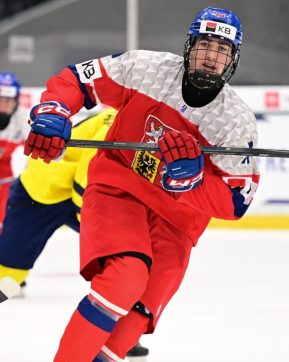 Matous Kucharcik
(Photo by Micheline Veluvolu/IIHF)
Matouš Kucharčík – C – SLAVIA PRAHA (CZECHIA U20) – MCKEEN’S RANK – #147
Kucharčík is an interesting project. He has decent size at 6-foot-2 but needs to add a lot more muscle to his current frame (165 pounds). He does have promising offensive tools, he’s not afraid to be flashy, he’s strong with the puck on his stick, has a dangerous wrist shot, and his skating is also decent. He might have a future in the NHL as a middle-six forward. He just needs to add more muscle to bring the physicality to his game and work on his overall skills. The potential to become a valuable NHL player with the right development is definitely there. – Matej Deraj
 Växjös Liam Pettersson
Photo: Jonas Ljungdahl / BILDBYRÅN
Liam Pettersson – D – VAXJO LAKERS (SWE J20) – MCKEEN’S RANK – #154
Pettersson is the kind of player who flies under the radar but has the makeup of a late-season riser. A mobile defenseman with good size (6-foot-2), Pettersson plays a quiet, effective game, especially on breakouts, where his simple and smart puck movement stands out. He doesn’t try to do too much, and that reliability is often overlooked in flashier prospects. His skating is solid, though with some technical refinement, he could become even more efficient. He’s not overly physical yet, but with added strength and a more assertive edge, particularly in puck battles, his defensive value will grow. Pettersson has room to compete harder in tough areas, and if he does, his ceiling shifts upward. Offensively, he has a decent skill set with a steady passing game and flashes of upside from the blue line. He’s not going to quarterback a power play, but he can contribute as a secondary option. If he takes a step physically and sharpens his compete level, there’s real potential for him to emerge as a dependable bottom four defenseman at the next level. – Viktor Ahlund
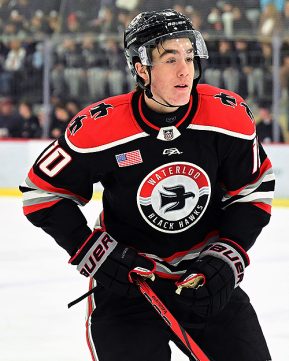 Brady Peddle
Brady Peddle – D – WATERLOO (USHL) – MCKEEN’S RANK – #165
I see Brady Peddle as a really intriguing option in the mid-to-late rounds of the draft, and he jumped up many draft boards after equaling his regular-season production in the playoffs. While he doesn’t offer much upside, he plays a physical game and is smart on the breakout. Brady grinds in front of the net to keep his crease clean and wins board battles galore against larger opponents, making him an attractive candidate to carve out a role as a reliable bottom-pair defenseman. He’s one of the more well-rounded and mature defensemen outside of the top 100 pick range. – Kaeden Ireland
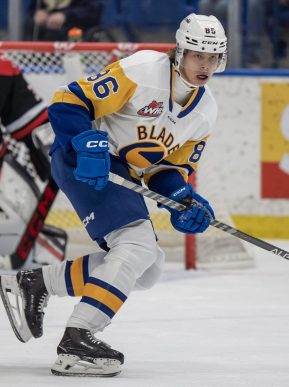 David Lewandowski.
David Lewandowski – LW – SASKATOON (WHL) – MCKEEN’S RANK – #178
Picks in the later rounds of the draft are players that need work, but it’s important that there is a pathway to NHL success, and that is exactly what one team will get with Saskatoon Blades forward David Lewandowski. The 6-foot-1 German has some skill, is strong on the puck, and is willing to play physically. A sore spot for him? Skating, which happens to be arguably the skill that NHL teams are able to develop the most effectively. If the team that drafts him can work with him to grow into even an average skater, it is easy to see a third-line winger in the NHL here. – Jamison Derksen
 Shawn Carrier
(Trevor MacMillan/Halifax Mooseheads)
Shawn Carrier – LW – HALIFAX (QMJHL) – MCKEEN’S RANK – #123
At a certain point during the draft, there comes a time when the remaining players are not very likely to turn into consistent NHLers. The available options will oftentimes be players who might turn into a bottom-of-the-lineup player if everything goes right. Although Shawn Carrier is expected to be drafted into those later rounds, he is an exception to the rule; he could, with the ideal development, turn into a great middle-six forward. Carrier is consistently the fastest, most high-flying skater on the ice. He plays with overflowing confidence, driving the play through the middle, dishing tricky passes and showing great lateral deceptive skills when attacking the opposing defence. He has the hands to keep up his high pace of play and has an underrated shot. Carrier could absolutely be one of the biggest steals of the draft down the road. – Jeremi Plourde
 Jacob Kvasnicka.
Photo by Rena Lavertry, USA Hockey
Jacob Kvasnicka – RW – USN U18 (USDP) – MCKEEN’S RANK – #164
Kvasnicka is one of the hardest workers in the entire 2025 draft class. He consistently finds himself in the right place at the right time as he creates opportunities for teammates. While his stat line makes him a long shot for the NHL, undrafted Frank Vatrano put up similar numbers before forcing his way into the NCAA, AHL, and then the NHL. Although his puck skills may not wow as much as his peers at the NTDP, his raw tools, vision, and unrivalled drive make him a tempting option in late rounds. Kvasnicka is playing college hockey next season, where he aims to earn a top-six role with the University of Minnesota. – Sean Boyd