
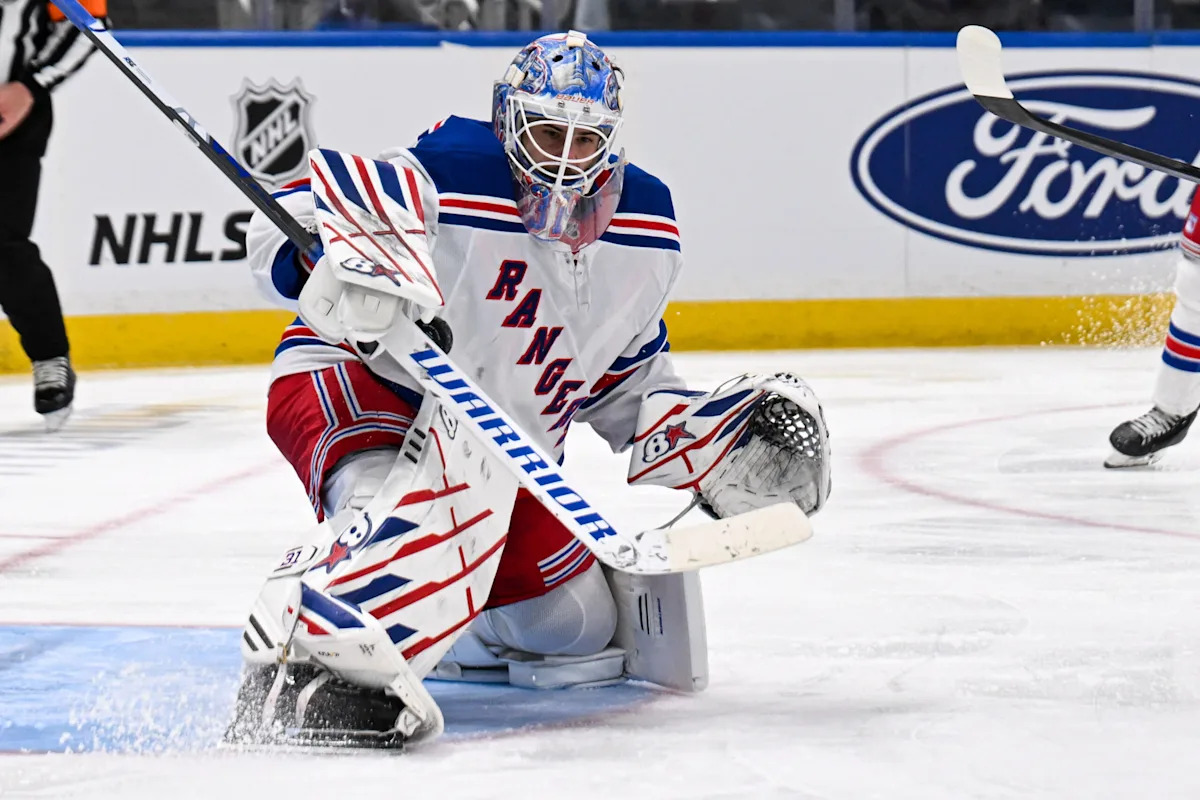
It’s one thing to make a good pick in the first round of the NHL Draft, as the New York Rangers will try to do when this year’s draft begins Friday in Los Angeles. After all, you’re dealing with what’s supposed to be the cream of the crop of young hockey talent. But a big part of the Rangers’ success in the past 25 years has come because they’ve found gems well after the first round.
The vast majority of Rangers games during the past two decades have been started by goaltenders who were selected after the 100th pick in their respective drafts. The Rangers captain from 2011-14 was also taken well after pick No. 100 in his his draft year, as were a pair of excellent defensive forwards who were part of the 2013-14 team that lost to the Los Angeles Kings in the Stanley Cup Final.
Advertisement
Most recently, three forwards who were part of this past season’s team and appear to be staples next season were lower-round picks within the past six years: Brett Berard (2020; fifth round, No. 134), Matt Rempe (2020; sixth round, No. 165) and Adam Edstrom (2019; sixth round, No. 161).
Each hopes to enjoy the success that these five later-round choices (all taken after pick No. 100) enjoyed with the Rangers.
Related: NHL insider fuels trade rumors, states Rangers coach ‘not huge fan of K’Andre Miller’s game’
Igor Shesterkin (2014; Round 4, No. 118)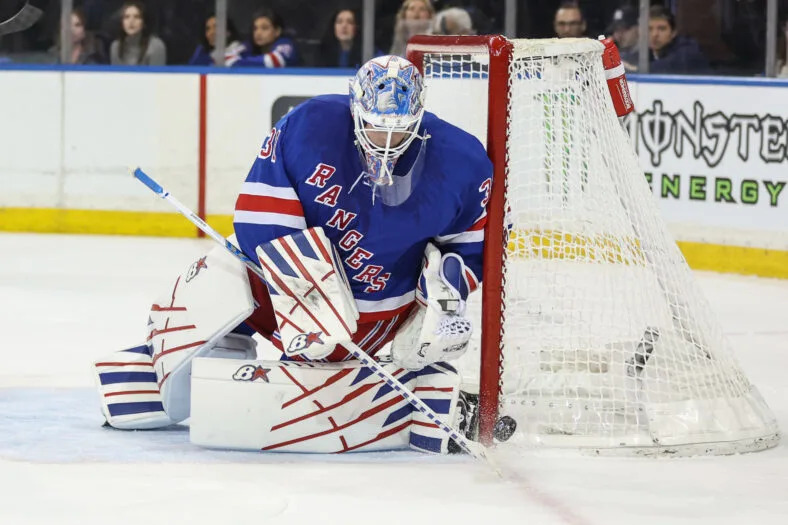
Wendell Cruz-Imagn Images
Igor Shesterkin wasn’t even the first goaltender taken by the Rangers in the 2014 draft. That honor belongs to Brandon Halverson, who played one game in relief with the Rangers on Feb. 17, 2018, and finally made his first NHL start with the Tampa Bay Lightning on March 22 of this past season.
Advertisement
Meanwhile, the Rangers waited on Shesterkin, who thrived in the KHL before signing with the Rangers in the summer of 2019.
Shesterkin was 10-2-0 in 12 appearances in 2019-20 before the regular season came to a halt because of the coronavirus pandemic. Two seasons later, he won the Vezina Trophy as the top NHL goaltende, when he led the League in goals-against average (2.07) and save percentage (.935). He also led the Rangers to the 2022 Eastern Conference Final; though they lost to the Tampa Bay Lightning in six games, Shesterkin excelled with a 2.59 GAA and .929 save percentage.
Shesterkin’s remained one of the top handful of goalies since then, averaging more than 36 wins in a three-season span. He helped the Rangers to a franchise-record 55 victories in 2023-24 on the way to winning the Presidents’ Trophy and again reaching the Eastern Conference Final.
Shesterkin begins an eight-year, $92 million contract, the richest fora goalie in NHL history, in 2025-26 – meaning he figures to be with the franchise for a long time. It’s been a remarkable first six NHL seasons for a player who lasted well beyond the first 100 picks in his draft year.
Henrik Lundqvist (2000; Round 7, No. 205)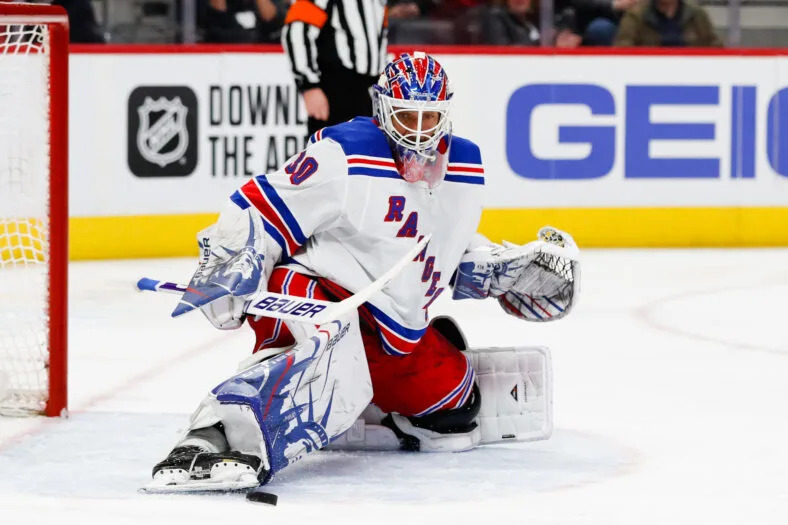
Rick Osentoski-Imagn Images
The Rangers were looking for a goaltender in the late rounds of the 2000 NHL Draft. Little did they know they would find a future Hall of Famer and the winningest goaltender in their history with the 205th pick.
Advertisement
Christer Rockstrom, then the Rangers’ head European scout, had seen a young Swedish goalie names Henrik Lundqvist play in the years leading up the to 2000 draft. Lundqvist didn’t impress in international tournaments, but Rockstrom saw him play with his club team and at practice. He was impressed, as was Jan Gajdosik, a European scout for the Blueshirts.
Don Maloney, who was overseeing the draft table, happened to look to his left when the Rangers turn in the seventh round approached and saw Lundqvist’s name at the top of Rockstrom’s list. A few minutes later, the Rangers had their goaltender of the future.
It took a while – Lundqvist’s game developed in Sweden, where he won an SHL championship with Frolunda, until he came to North America in 2005. He began 2005-06 as the backup to Kevin Weekes but soon became the starter and kept that role for the next 15 seasons. He won at least 30 games in each of his first seven seasons and 11 of the first 12 (ironically, his 24 wins led the NHL during the lockout-shortened 2012-13 season).
Lundqvist was a Vezina Trophy finalist in each of his first three seasons before winning the award in 2011-12. He backstopped them to the 2014 Stanley Cup Final, though the Rangers lost to the Kings in five games – with three of the losses came in overtime.
Advertisement
He signed with the Washington Capitals for the 2020-21 season but had to retire because of a heart problem, meaning that Lundqvist played his entire career with the Rangers. He retired as holder of team records with 887 games played, 459 victories, 64 shutouts and a .918 save percentage (minimum 60 games played). His No. 30 hangs in the rafters now and forever at Madison Square Garden.
Lundqvist was inducted into the Hockey Hall of Fame in 2023, capping one of the greatest unexpected careers in NHL history.
Ryan Callahan (2004; Round 4, No. 127)
Eric Hartline-Imagn Images
Few players in Rangers history have worked harder than Ryan Callahan, who went from being left out of the intrasquad game at training camp in 2005, one year after being drafted, to captain of the Blueshirts six years later.
Advertisement
“He put so much into the game,” former Rangers coach John Tortorella told the New York Post after Callahan officially retired in December 2020. “In my mind, he epitomized the way you have to play the game, at least in my opinion. He did it by pure effort and desire. Never took a shift off. Never took a practice off.
“And that’s how he becomes the captain of the Rangers.”
Callahan, who held the team record for hits (285 in 2009-10) until Will Cuylle surpassed him with 301 in 2024-25, was part of the “Black and Blueshirts,” and would do anything the Rangers needed to win. Block a shot? He broke his ankle in 2010 blocking a blast from Zdeno Chara. Step into an opponent? He had at least 224 hits in four straight seasons from 2008-09 through 2011-12.
But Callahan also was a skilled forward, who produced solid offensive numbers. When he was piling up all those hits from 2008-12, he also averaged 23 goals and 45 points, including 29 goals and 54 points in 2011-12, when he helped the Rangers finish first in the Eastern Conference and get to the conference final.
Advertisement
However, his numbers began to drop off, and with Callahan headed for free agency after the 2013-14 season, the Rangers traded him to the Tampa Bay Lightning on March 5, 2014, as part of the package that brought Martin St. Louis to Broadway. Callahan missed the run to the 2014 Cup Final but got a measure of revenge the following year when he and the Lightning defeated the Rangers in Game 7 of the East Final to advance to the 2015 Stanley Cup Final against the Chicago Blackhawks.
Callahan’s body began breaking down not long after. He played his last NHL game in 2018-19 and retired in 2020. As he told the Post, “I gave everything I had until there was nothing left to give.”
Jesper Fast (2010; Round 6, No. 157)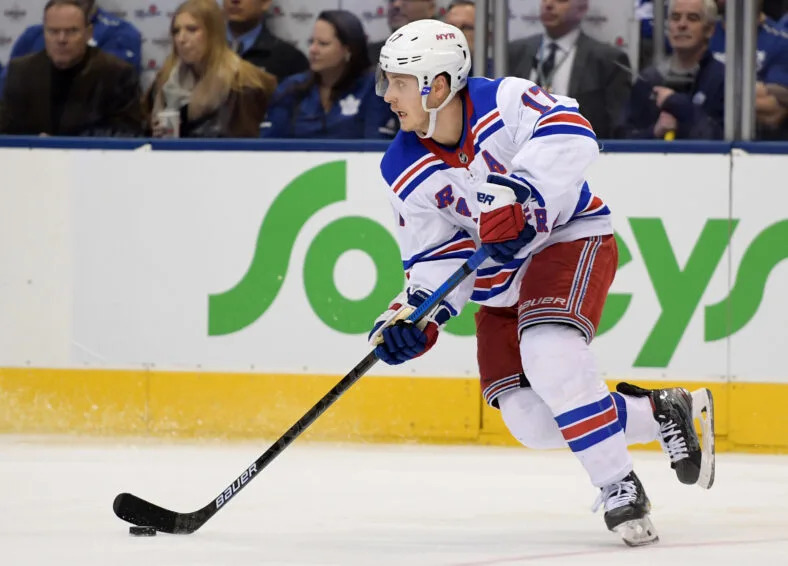
Dan Hamilton-Imagn Images
Fast really was fast — coach Alain Vigneault nicknamed him “Quickie.” But his journey to the NHL took a while.
Advertisement
The forward from Sweden spent two more seasons in his native country before the Rangers signed him in May 2012. He played one more season at home with HV-71, winning the Swedish Hockey League’s equivalent of the Lady Byng Trophy, when he finished with 18 goals and 35 points in 47 games.
HV-71 was eliminated from the SHL playoffs earlier than expected, and Fast joined the Rangers organization. He scored a goal for the AHL Connecticut Whale (now the Hartford Wolf Pack) in his North American debut but sustained a knee injury and didn’t play again until the following season.
He spent most of 2013-14 in the minors but did get into 11 regular-season and three playoff games with the Rangers. Fast was a regular by the end of the following season and remained one through 2019-20. He developed into a dependable bottom-six forward and penalty-killer who was effective on the forecheck and averaged 10 goals and 26 points during a five-year span. He helped the Rangers get to Game 7 of the Eastern Conference Final in 2015 and had career-highs of 13 goals and 33 points in 2017-18.
Fast became a free agent in the summer of 2020 and signed with the Carolina Hurricanes. He played four seasons with the Rangers rival and was on the losing end when New York defeated Carolina in the second round in 2022. A neck injury kept him out of the rematch in 2024, when the Rangers again knocked off the Hurricanes in six games, and he retired in June 2025 after missing all of 2024-25 following offseason neck surgery. He ended up playing 703 regular-season games, 422 with the Rangers, and scored 55 of his 91 goals with New York.
Carl Hagelin (2007; Round 6, No. 168)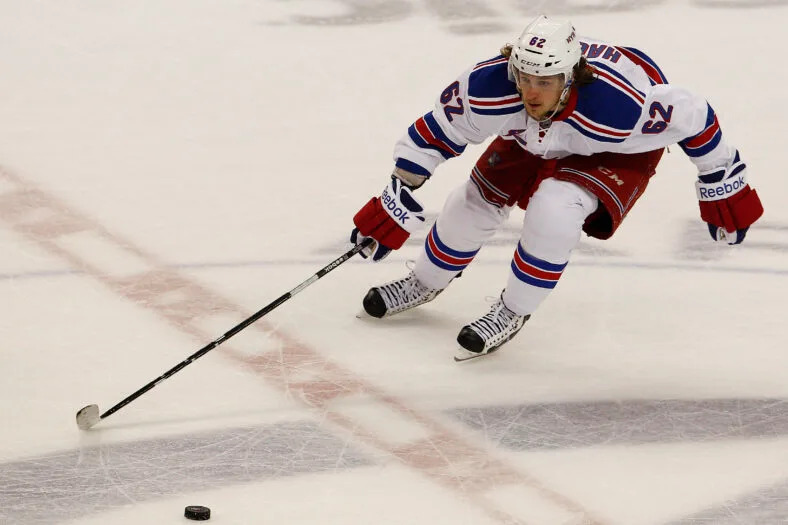
Reinhold Matay-Imagn Images
Hagelin, another swift forward from Sweden, took a different path to the NHL after he was selected by the Rangers in 2007, following two excellent seasons in Sweden’s Under-20 league.
Advertisement
Instead of staying home as Fast did, Hagelin came to North America and played four seasons at the University of Michigan, becoming the first Swede ever to play for the Wolverines. The Rangers signed him after his college career ended in 2011, and he joined the Connecticut Whale in time for the AHL playoffs.
He had an assist in his NHL debut on Nov. 25, 2011, then scored his first goal the next day against Sergei Bobrovsky of the Philadelphia Flyers. Hagelin won the Fastest Skater competition at the NHL All-Star Weekend and finished his first NHL season with 14 goals and 38 points as well as a plus-21 rating.
Speed was Hagelin’s stock in trade. He was an effective third-liner and penalty-killer who averaged almost 15 goals during his four seasons on Broadway despite almost no power-play time. Hagelin helped the Rangers get to the Stanley Cup Final in 2014, chipping in seven goals and 12 points in 25 postseason games.
Though Hagelin matched his career high with 17 goals in 2014-15, he also became a free agent that summer. Management decided to trade him rather than lose him for nothing, so he was dealt to the Anaheim Ducks on June 27, 2015.
Advertisement
The Ducks traded him to the Pittsburgh Penguins three months later, just in time to help them win the Stanley Cup in the spring of 2016 as part of the “HBK Line” with Nick Bonino and Phil Kessel. The Penguins repeated in 2017, when Hagelin scoring the clinching empty-net goal in Game 6 of the Final. The Penguins traded him to the Los Angeles Kings in November 2018, and the Kings wheeled him to the Washington Capitals two weeks later. He played with Washington through the 2021-22 season, missed 2022-23 after an eye injury and hip surgery, and officially retired in August 2023.
Related Headlines