
The offseason is here, and one of the most crucial things to know going into it is how each team stands on a position-by-position basis. Today, we look at each team’s defensive depth with regard to what they already have and what they need this summer.
Using Net Rating as a starting point, we looked at how much value each team is currently carrying on the back end to figure out what holes it needs to address.
The stronger a team looks through the lineup, the better its baseline looks. We’ve also detailed our center depth rankings and winger depth rankings.
After adding a subjective touch, here’s how each team’s defensive depth ranks from best to worst before free agency begins.
1. Edmonton Oilers
Current quality: 99th percentile
Looking for: None
One of the reasons the Oilers were able to march back to the Stanley Cup Final was a defensive group so deep it was able to survive an injury to Mattias Ekholm, a top-pair star. That was made possible by the addition of Jake Walman, a lower-lineup luxury who gave the Oilers a heavy advantage in easier minutes.
Edmonton’s group is a strong mix of offensive mobility and defensive suppression throughout, led by Evan Bouchard — a no-doubt franchise defenseman. This is a huge position of strength, one that could be parlayed into fixing an area of need elsewhere.
2. Colorado Avalanche
Current quality: 91st percentile
Looking for: Top-four defenseman
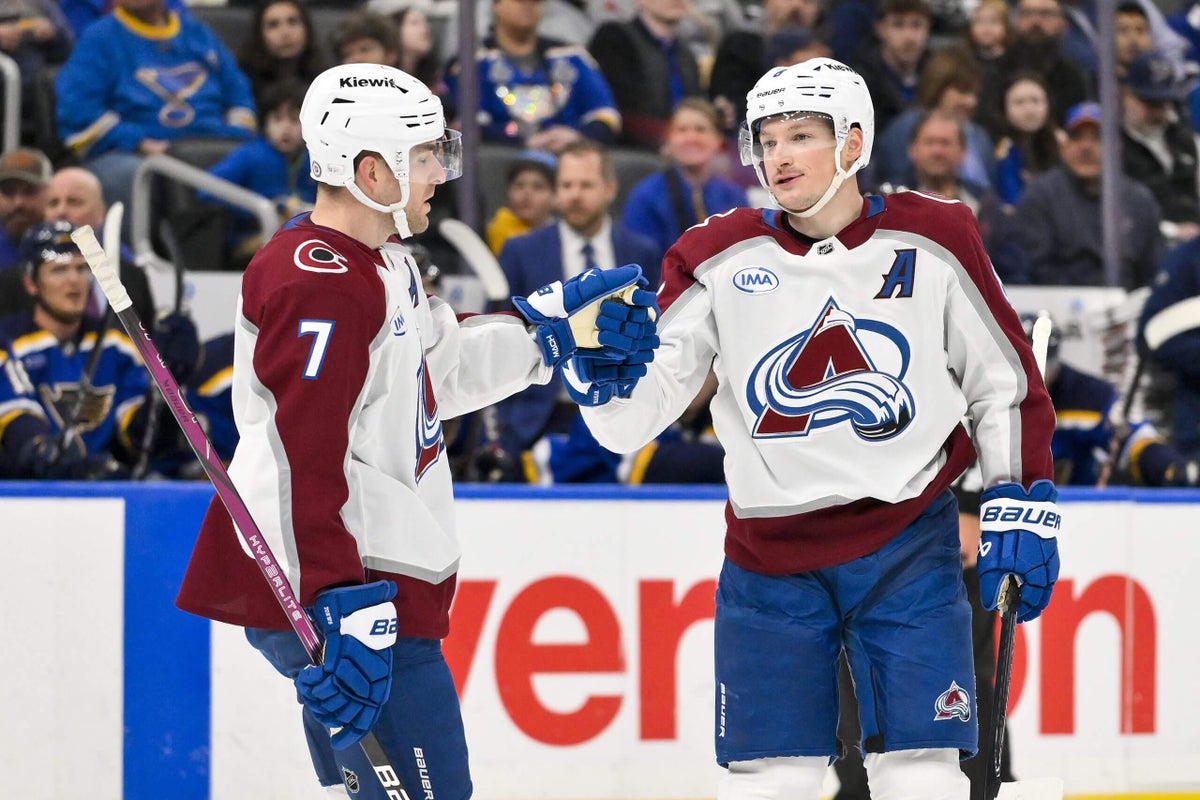
The Avs employ the best defenseman on the planet and another who’d be No. 1 for, give or take, half of the rest of the league. Cale Makar and Devon Toews, all by themselves, are enough to put their team near the top of any list like this one. They’re that good.
What Colorado currently rolls behind their all-world pair, though, is a bit of a problem. Josh Manson is third-pair caliber these days, and Sam Girard would be best served with a higher-quality partner. Behind them, only Keaton Middleton is signed for 2025-26, and the Avs are close to the cap. If Makar and Toews are the best version of themselves, it’s not a huge issue, but there’s also not much of a safety net.
3. Winnipeg Jets
Current quality: 87th percentile
Looking for: Depth defenseman
Thanks to the emergence of Dylan Samberg and the resurgence of Neal Pionk, the Jets have a strong top four that has become their backbone. It strengthened the team’s superpower in net, turning the Jets into one of the league’s very best defensive teams.
It’s not perfect though, not with a bottom pair that struggled often last season. While the Jets don’t have a hole to fill on the third pair, they still could use an upgrade.
4. Dallas Stars
Current quality: 87th percentile
Looking for: Top-four defenseman
The Stars get nearly all their value from Miro Heiskanen and Thomas Harley, both of whom are projected to have top-10 seasons at the position. Esa Lindell is also a capable partner for Heiskanen on the top pair. That’s an outstanding foundation.
Dallas, though, once again badly needs a legit No. 4 who plays on the right side — because Ilya Lyubushkin and Matt Dumba aren’t going to cut it. Lian Bichsel works as a third-pair guy with upside, and Lybushkin would look better playing easier minutes beside him, but there’s still a hole in the top four.
5. Vancouver Canucks
Current quality: 85th percentile
Looking for: Depth defenseman
At the great expense of the team’s center depth, the Canucks have a top-five blue line. Was it worth losing Bo Horvat and J.T. Miller? Probably not! But for now, it’s the team’s biggest strength.
Quinn Hughes is a top-two defenseman in hockey, no argument there. The top four behind him is much more settled with his usual partner Filip Hronek and the addition of Marcus Pettersson. Both are decent 2/3 types. The addition of Pettersson allows Tyler Myers to slip into a more appropriate role as a No. 4 as well.
If there’s a quibble here, it’s with the third pair. Neither Derek Forbort nor Elias Pettersson (defenseman version) really move the needle and are below-average for their role. There’s a chance Elias Pettersson can grow in his second season, but for now it’s what’s keeping the Canucks from a higher standing.
6. Washington Capitals
Current quality: 83rd percentile
Looking for: High-end defenseman
The Capitals didn’t clock in all that highly at center or on the wings. Defense, though, is another story; Washington has one of the deepest blue lines in the league. All six of their every-day D-men are returning for the 2025-26 season. That’s great news for a team that finished last season atop the Eastern Conference. It’s a talented, diverse group.
Just how good they are moving forward probably hinges on whether John Carlson, who had 51 points in 2024-25, keeps performing at a high level. When he truly starts to decline, Washington will need Jakob Chychrun, who crushed relatively sheltered minutes, to take over some of his responsibilities. The two played together in the postseason to mixed results.
7. Vegas Golden Knights
Current quality: 82nd percentile
Looking for: Depth defenseman
Vegas’ placement on this list hinges on whether Alex Pietrangelo can play, but the Golden Knights already had a bit of a contingency plan in place when they acquired and signed Noah Hanifin. With him and Shea Theodore in tow, plus the defensive might of Brayden McNabb, Vegas should be just fine — even without Pietrangelo. The Golden Knights have a top-five defense with him, but even without, they’re firmly in the top 10.
The strength of the team’s top three means Vegas doesn’t necessarily need a flashy top-four guy when an internal promotion can do. That could be Zach Whitecloud or Kaedan Korczak, who put up some sparkling results in sheltered minutes, enough for a model to be a fan despite his usage. In a bigger role, Korczak could be this year’s Pavel Dorofeyev, who broke out on the wing for Vegas last season.
8. Tampa Bay Lightning
Current quality: 66th percentile
Looking for: Depth defenseman
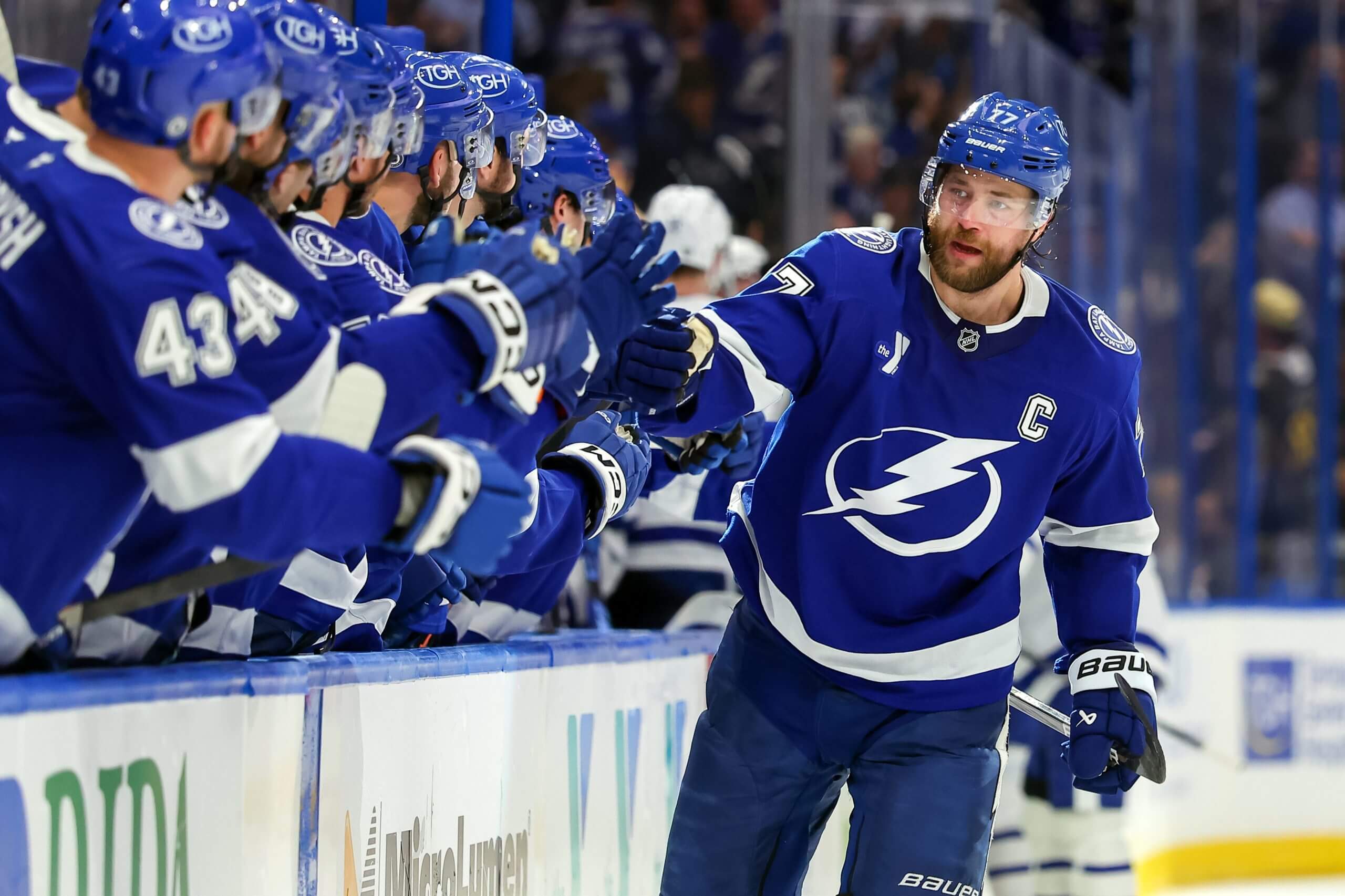
From 1 through 5, Tampa is in great shape. Victor Hedman still projects as a high-end No. 1, even as he approaches his 35th birthday. Ryan McDonagh, at 36, is still eminently capable of handling tough minutes on his own pair. J.J. Moser and Erik Cernak, as their top-four running mates, get the job done. Darryn Radysh is a solid third-pair guy.
The issue for the Lightning, at least as it relates to this list, is that the model doesn’t like Emil Lilleberg at all; his projection is near the absolute bottom of the league. The good news is that he’s still just 24 and has only played one full NHL season, so there’s room for growth, especially from such a brutal starting line.
The Lightning are in good shape with Victor Hedman leading the way. (Mike Carlson / Getty Images)9. Utah Mammoth
Current quality: 75th percentile
Looking for: Top-pair defenseman
The Mammoth acquired Mikhail Sergachev to emerge as a legit No. 1 defenseman, and everything on that front is trending in the right direction. They could use a better option playing to his right on the first pair, but plenty of other teams find themselves in a similar situation. John Marino and Sean Durzi are probably capable of getting the job done in that regard.
The rest of the group is deep enough to work, too. Utah is in good shape. It doesn’t mean it shouldn’t try to upgrade in some spots, but the Mammoth have done well.
10. New Jersey Devils
Current quality: 71st percentile
Looking for: High-end defenseman
The Devils’ group is basically set in terms of who’s playing and where, and the end result is a group that lands just inside the top 10. What they need is one of their young defensemen to step up as Dougie Hamilton ages. While Hamilton still has offensive juice, he’s no longer defensively stout enough to be franchise-level. The Devils badly need Luke Hughes or Simon Nemec to take over that mantle.
New Jersey needs a No. 1 defenseman and spent a lot of draft capital to make it happen. Is this the year that one of them makes due on that promise?
11. Minnesota Wild
Current quality: 64th percentile
Looking for: High-end defenseman
The Wild are deep defensively, that’s no secret. From top to bottom, Minnesota has high-quality players. It’s their identity down to each player’s defensive ability.
What they lack, though, is a No. 1. That was Jared Spurgeon, but age is starting to catch up with him. It was supposed to be Brock Faber, but his game fell off hard in the season’s second half. It could be Zeev Buium, but he’s only a rookie who looked very green in the playoffs.
The Wild sit on the cusp of the top 10 and don’t need to make any additions to solidify the group. But they do need someone to step up and be franchise-caliber. Whether it’s Spurgeon turning back the clock, Faber breaking through or Buium dominating from the jump, someone has to be The Guy.
12. Carolina Hurricanes
Current quality: 61st percentile
Looking for: Top-pair defenseman
Brent Burns’ time on the first pair is almost certainly over. He turned 40 in March and is a pending UFA, and his performance noticeably dipped in 2024-25. That means it’s time to find Jaccob Slavin, one of the very best defensive defensemen in the NHL, a new partner.
Carolina has in-house options, and nobody on its current group is a problem, which is part of the reason they find themselves on the edge of the top 10 even with a hole next to Slavin. That said, none of those options are ideal.
Jalen Chatfield has become a solid second-pair guy, and Slavin has a way of making his partners better, but that’d be a lot to ask. You could say something similar about Sean Walker. Scott Morrow remains a solid prospect, but he wasn’t great in the postseason. Alexander Nikishin is green, too, and a left shot. The puzzle pieces are interesting, though, even if they don’t fit perfectly at the moment.
13. St. Louis Blues
Current quality: 57th percentile
Looking for: High-end defenseman
The Jim Montgomery Effect is clear on the Blues’ defense. With him in place as head coach, Colton Parayko — at 31 and after a couple seasons’ worth of declining play — looked like something close to a No. 1 guy. Cam Fowler, acquired from Anaheim around the time Montgomery took over, turned back the clock as well.
The end result is a solid, deep group that projects well for 2025-26, though it’d all look even better for St. Louis if it had a true high-end piece. Can Parayko keep marching back toward that designation? Does Phillip Broberg, already a huge success story with the Blues, have another offensive gear? Those two are their best in-house bets.
14. Florida Panthers
Current quality: 52nd percentile
Looking for: Top-pair defenseman
Never, ever doubt Florida’s ability to find a defenseman. Gustav Forsling, Niko Mikkola, Dmitry Kulikov — all look much, much better with the Panthers. Seth Jones, too. Whoever they sign or acquire this offseason will probably work out well, because their acquisitions almost always do.
Still, it’s hard not to be a little concerned about the sizable hole to their blue line potentially left by Aaron Ekblad and Nate Schmidt. The former has been a Panthers lifer, a No. 1 pick and a top-pair stalwart for a decade. The latter has been a monster on the third pair. They won’t be easy to replace.
With both back, the Panthers would have a top-10 defense with no holes. Re-signing Ekblad alone brings them to the 78th percentile. With neither, the team’s group only looks average.
15. New York Islanders
Current quality: 53rd percentile
Looking for: Top-pair defenseman
The Islanders have a pretty solid group with one real hole thanks to the degradation of Ryan Pulock’s game: a first-pair defenseman. Noah Dobson is their top guy (if they keep him), but it would be ideal to have another to add to a strong top four that also includes Adam Pelech and Alexander Romanov.
Lucky for the Islanders, that hole looks likely to be filled at the draft with the No. 1 overall pick. While it’s unlikely Matthew Schaefer, the likely choice, will be top-pair caliber as a rookie, it is very likely that he gets there one day.
16. Los Angeles Kings
Current quality: 52nd percentile
Looking for: High-end defenseman
Last offseason, the Kings found themselves in a similar spot, largely due to the pending exit of No. 2 defenseman Matt Roy. Vladislav Gavrikov stepped up and now finds himself in position to cash in, big-time, on the UFA market. Once again, Los Angeles has a hole to fill on its top four — and Joel Edmundson is not nearly as good an in-house option as Gavrikov.
The bigger issue, though, is that Drew Doughty, who turns 36 in December, started to look his age after a franchise-caliber 2023-24 season. Los Angeles badly needs someone, ideally Brandt Clarke, to replace some of that production. Jordan Spence is also an interesting right-side option.
17. Buffalo Sabres
Current quality: 51st percentile
Looking for: Top-pair defenseman, top-four defenseman
The Sabres are here primarily because of Rasmus Dahlin. He’s one of the best defensemen in the league, a no-doubt, high-end No. 1 who finished sixth in Norris voting last season and is a solid bet to do it again in 2025-26.
Behind him is some talent and plenty of uncertainty. Bowen Byram’s results were good to Dahlin’s right, but he’s a left shot and a pending RFA who struggled with other partners. Mattias Samuelsson is a buyout candidate.
Worst of all, Owen Power’s development seems to have stagnated. If he figures it out, Buffalo will be in good shape. That can’t be taken as a given, though, and neither can anything about the Byram situation. The end result is, not surprisingly, a mess. But hey, Dahlin is really good!
18. Toronto Maple Leafs
Current quality: 49th percentile
Looking for: High-end defenseman
Over the last decade, one of Toronto’s biggest problems has been a lack of a true No. 1 defenseman. Morgan Rielly at his peak may have been offensively gifted enough, but he gave way too much back to really qualify.
To this day, it remains an issue for Toronto, leading to the team’s top forwards playing one-dimensional hockey when it matters. When Nathan MacKinnon can play with Cale Makar and Connor McDavid can play with Evan Bouchard, they can offensively dominate while not giving much back. Auston Matthews playing with all-defense guys such as Jake McCabe and Chris Tanev does not offer the same luxury.
So while Toronto’s blue line is mostly complete and is deep, it’s lacking the high-end talent necessary to go all the way. The Leafs have three No. 2s and two solid guys in Oliver Ekman-Larsson and Brandon Carlo, but the lack of a clear-cut No. 1 is a huge problem.
19. Boston Bruins
Current quality: 48th percentile
Looking for: Top-four defenseman
The top of Boston’s blue line is in fine shape. Charlie McAvoy projects as a true top-pair guy, and all signs point to him being fully healthy after a scary, unfair injury in the 4 Nations tournament. You could say something similar for Hampus Lindholm, a solid complement to McAvoy whose season ended after a February knee injury.
Boston badly needs a partner for Nikita Zadorov on the second pair, though — and not just as a complement, either. Zadorov is more of a No. 4, at this point in his career. Mason Lohrei has clear potential there but also needs to improve as a defender.
20. Montreal Canadiens
Current quality: 41st percentile
Looking for: Top-pair defenseman
The model, like nearly everyone else who watched him play, has made its decision on Lane Hutson. He’s projected to be a top-10 defender in terms of value for the 2025-26 season. One of Montreal’s priorities should be figuring out whether Kaiden Guhle is Hutson’s long-term partner — and Guhle showed some signs — or if David Reinbacher is the better fit.
Reinbacher, the No. 5 pick in 2023, had a rough season but still profiles as a high-floor, low-ceiling option who would make sense next to Hutson. He’s also a right shot, something Montreal lacked last season. If he pops, Montreal will be in fine shape.
Beyond that, Montreal has two capable veterans (Mike Matheson and Alex Carrier) and Arber Xhekaj, a player whose poor projection pushes the Canadiens down these rankings.
21. Nashville Predators
Current quality: 58th percentile
Looking for: Top-pair defenseman, top-four defenseman
Roman Josi’s presence does a lot of the heavy lifting. It pays to have a franchise defenseman in the fold, and Nashville’s place is colored a fair bit by his presence.
Nashville’s big need is help for Josi, especially in the wake of his Postural Tachychardia Syndrome (POTS) diagnosis. Brady Skjei is probably an OK No. 4, even after a rough season, but there’s a big gap between him and Josi in the top four. To their credit, a few of Nashville’s depth guys — Nick Blankenberg and Adam Wilsby — earned competent results last season. They could work as internal options if that wasn’t a fluke. Still, it would help to add an established player.
22. Ottawa Senators
Current quality: 38th percentile
Looking for: Top-four defenseman, depth defenseman
There’s nothing inherently wrong with Ottawa’s top four. Nick Jensen sliding down into a third-pair role would be ideal, but he’s still a passable No. 4.
The biggest concern is with the team’s third pair, which got crushed last season in heavily sheltered minutes. To their credit, they looked solid during the playoffs, but Ottawa is counting on some massive growth from Tyler Kleven and Nikolas Matinpalo that might be wishful thinking. Both look well below replacement level, which is the main reason the Senators fall below average here.
23. New York Rangers
Current quality: 36th percentile
Looking for: Top-pair defenseman, top-four defenseman
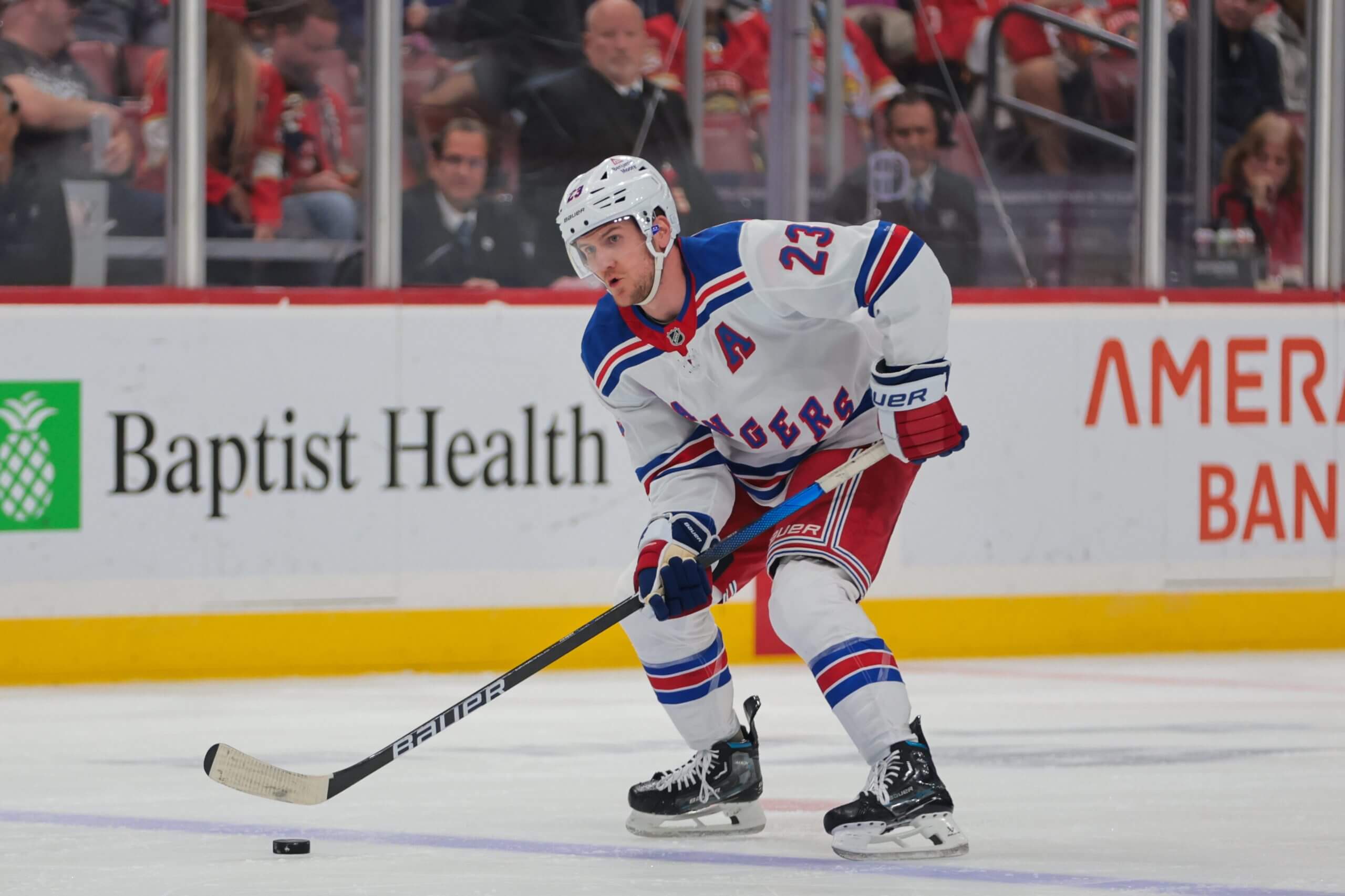
Adam Fox, unsurprisingly, is at the top of the list for the Rangers. He might not have acquitted himself all that well for Team USA at the 4 Nations, but he remains an extremely effective NHL player, and he’s on the bubble of the top five for 2025-26 projections.
Behind him is K’Andre Miller, who remains a very real trade piece. On some level, that’s understandable, because he’s set to be an RFA and he seemed further than ever from true top-pair status after last season. For now, though, he’s the only non-Fox Rangers defenseman who works on a top pair. Moving him would create another hole.
Adam Fox is in the discussion as a top-five defenseman. (Sam Navarro / Imagn Images)24. Columbus Blue Jackets
Current quality: 23rd percentile
Looking for: Top-pair defenseman, top-four defenseman
It helps to have Zach Werenski, one of the league’s top defensemen, but losing Dante Fabbro and Ivan Provorov in one offseason would hurt. That’d be half the team’s top four gone. Having Damon Severson as the team’s second-best defenseman is a scary place to be.
Unless the Blue Jackets find a way to address the top four, it’ll be very difficult to build on last season’s success.
25. Seattle Kraken
Current quality: 25th percentile
Looking for: High-end defenseman
Analyzing anything about the Kraken can feel like listening to a broken record. Sing it with us: Lack of top-end talent.
Vince Dunn, Brandon Montour and Adam Larsson are all solid NHL players, but they’re all slotted one spot too high in the lineup. We said something similar about Seattle’s forwards, too. The end result is a roster that’ll need to catch a bunch of breaks if it’s to end up as anything more than mediocre.
26. Philadelphia Flyers
Current quality: 45th percentile
Looking for: High-end defenseman
The best way to describe Philadelphia’s defense corps? Fine. It’s fine. No serious weaknesses, decently deep, but also no legit stars. It’s fine. Is “fine” enough? Probably not, which is why we bumped the Flyers down several pegs.
Like the team’s issues up front, the main need here is star power. Travis Sanheim is a good defenseman, but it’s hard to call him a great defenseman, one a franchise is built around. On a contender, he’s an ideal No. 2, but as a No. 1, he’s probably miscast.
Can Sanheim take an unexpected leap to that level? It’s possible. Jamie Drysdale and Cam York have a small chance of getting there, too. But it’s not probable for any of the three. For now, there’s a serious lack of high-end talent on the Flyers’ blue line, and it’s a big reason they’ll be unlikely to compete for a playoff spot anytime soon.
27. Detroit Red Wings
Current quality: 17th percentile
Looking for: Top-four defensemen, depth defensemen
For plenty of reasons, last season was a disappointment in Detroit. Moritz Seider and Simon Edvinsson, though, weren’t part of it. Seider posted the best five-on-five numbers of his career against still-brutal competition, and Edvinsson showed that he works both as a partner for Seider and an anchor on a second pair. There, the Wings are set.
Beyond them, there’s very little. Albert Johansson showed some promise, but Ben Chiarot’s days on a top four should be over and Justin Holl is a buyout candidate. There are prospects in the pipeline, led by Axel Sandin-Pellikka, but the NHL group is extremely thin.
28. Calgary Flames
Current quality: 21st percentile
Looking for: Top-pair defenseman, top-four defenseman
MacKenzie Weegar is a No. 1 defenseman and the team’s leader from the back end. But there’s a pretty large gap between him and their next best defenseman, Rasmus Andersson, who looks closer to a No. 4. Andersson is solid offensively, but gives a lot back the other way. He’s also reportedly a trade candidate.
Either way, the gap between Weegar and Andersson leaves a pretty large hole in Calgary’s top four. The Flames are missing a No. 2 and No. 3. The rest of the group is pretty uninspiring, but fine for a third pair. When they play higher, there’s an issue.
The X-factor here, even with Andersson’s status, is rookie Zayne Parekh. Can he step in and immediately fill the top-four gap?
29. Pittsburgh Penguins
Current quality: 15th percentile
Looking for: High-end defenseman, top-four defenseman
Erik Karlsson and Kris Letang used to be No. 1 studs, but those days are over. That leaves the Penguins wanting in the high-end talent department on the back end. They’re also lacking in top-four talent altogether, as it’s just those two and then a bunch of third-pairing options.
Pittsburgh’s goal is clearly to compete for Gavin McKenna, so all the power to them. The defense, as currently constructed, should help.
30. Anaheim Ducks
Current quality: 9th percentile
Looking for: High-end defenseman, top-four defenseman
Anaheim has a pair of competent, overextended veterans in its top four, in Radko Gudas and Jacob Trouba. Jackson Lacombe also took a major step forward as a point-producer and offensive element, but he’s unlikely to become a No. 1. In all, it could be worse.
The Ducks, though, saw stagnation from Olen Zellweger and regression from Pavel Mintyukov last season, and that’s a major concern. If the rebuild is to actually work, they need both to be legitimate NHL defensemen and for one to be top-four worthy.
31. Chicago Blackhawks
Current quality: 2nd percentile
Looking for: High-end defenseman, top-pair defenseman, top-four defenseman
With Seth Jones gone, Chicago’s defense looks barren. The drop-off of Alex Vlasic last season didn’t help, and he now grades out closer to a No. 4, possibly a result of being crushed in a difficult role on a bad team. If he can get back up to top-pair caliber, that would help.
The Blackhawks still need the rest of their top four adequately filled out, though, and that means that their two highly drafted defensemen need to step up. Neither Artyom Levshunov nor Kevin Korchinski have looked ready defensively, and that’s a worrying sign.
The Blackhawks may need to add a veteran presence who can actually handle tough minutes so the kids aren’t fed to the wolves too quickly.
32. San Jose Sharks
Current quality: 1st percentile
Looking for: High-end defenseman, top-pair defenseman, top-four defenseman
Big picture, the main concern for the Sharks should be whether Sam Dickinson can step into the lineup and immediately go from top prospect to legitimate NHL defenseman. The Athletic’s Scott Wheeler is among those who love the long-term potential for the No. 11 pick in 2024.
As it stands, the defensive group is brutal. Timothy Liljegren is competent, and Mario Ferraro has been at points in his career. Even then, there’s not much worth analyzing here.
(Top photo of Devon Toews and Cale Makar: Jeff Curry / Imagn Images)