
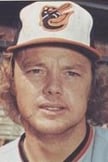
Followers of Tony La Russa’s career might recognize the name Dave Duncan as pitching coach for most of La Russa’s stops in his hall of Fame career. Before he was a Hall of Fame level pitching coach Dave Duncan was a catcher who played in the 60s and 70s with a brief stop in Baltimore.
Signed as a bonus baby by the Kansas City A’s in 1963 Duncan would be the youngest player in the league when he made his debut a year later at the age of 18. During his short stint between signing professionally and making his debut with the big league club he would meet Tony La Russia and this would plant the seed for what would become the longest head coach-coach connection in American sports history.
After his short stint in the major to comply with bonus baby roster rules Duncan spent a couple years in the minors. During one off season he enlisted in the Marines alongside fellow teammate and the first overall pick ever in the rule 4 draft, Rick Monday. The next year Duncan, Monday, and new arrival Reggie Jackson would be the big pieces in a deep Athletics farm system. All three would eventually work their way through the minors and make it to the big league roster in 1967.
As a member of the A’s after their move to Oakland in 1968, Duncan played in over 500 games at catcher. He would end up getting sent down a couple times and miss a couple stints of games due to service obligations with the Marines. Overall he would be a serviceable catcher for the Athletics pitching staff and made the all star team in 1971.
After a contract dispute before the 1973 season Duncan would be traded to Cleveland for future Oakland Athletics Hall of Fame broadcaster Ray Fosse and another player. In Cleveland he would again find regular playing time and eventually meet his wife while a member of the team. His fortunes on the field would change though as his once all star level defense and command of a pitching staff would regress. Duncan would finish the 1974 season with the 4th worse fielding percentage (.946) by a catcher who caught 125 games in the post integration era.
Changing tides in the AL along with Duncan's regression behind the plate would lead him, along with Al McGrew, to be traded to the Orioles in 1975 for Don Hood and Orioles Hall of Famer Boog Powell. With the Orioles he would hit around .200 serving as back up catcher to fellow future long time coach Elrod Hendricks. His two years as an Oriole were mostly uneventful besides one moment when he tied to record for most doubles hit in a game with 4 in 5 ABs during the second game of a double header in 1975. he would eventually be dealt to the White Sox before finishing his playing career and starting a Hall of Fame worthy career as a coach.
For several season Duncan would serve as a pitching and bullpen coach for a couple different organizations, initially getting his start with Cleveland having made connections there as a player before moving to Seattle. While in Seattle Duncan met with Tony La Russa and they discussed his potential future. Seeking a new opportunity Duncan was open to a new organization and La Russa sought front office permission to pursue his former teammate. During the 1982-83 off-season Duncan would going La Russa with the White Sox and would remain his pitching coach at several other stops for over 30 years.
After being fired by the White Sox in 1986 and quickly hired by the Athletics, yet another player coach stop for Duncan, he would help establish the Athletics as one of the best pitching staffs in the league and help build a world series winner. Once La Russa left for St Louis, the first hire he made was Dave Duncan again. The duo would again build a World Series winner, winning in 2006 and 2011 before La Russa would retire. After La Russa retired Duncan would stick around baseball, becoming a consultant for the Diamondbacks where La Russa worked briefly before eventually make his way back to the White Sox with La Russa’s return and remains in his position as a pitching consultant even after La Russa's departure.
Duncan would have two sons play in the major leagues, Chris and Shelby. He would also be inducted into the Cardinals Hall of Fame and Missouri Sports Hall of Fame as a pitching coach in 2024
From his SABR Article
Duncan is credited with having coached four Cy Young Award winners: LaMarr Hoyt (Chicago White Sox) in 1983, Bob Welch (Oakland A’s) in 1990, Dennis Eckersley (Oakland A’s) in 1992, and Chris Carpenter (St. Louis Cardinals) in 2005. However, in many ways Duncan revolutionized the role of a pitching coach. As part of his duties, he maintained records on every opposing hitter. His files indicated the type of pitch each batter hit, the location of the pitch, and the description of where the batter hit the ball. While many experts attributed his success to his innovative methods, Duncan himself ascribed his achievements as a pitching coach to his ability to deal with a wide range of personalities and approaches to the game. As a catcher he learned early on that differences in personality often required different approaches to the game. Armed with this knowledge, Duncan was able to get the most out of his pitchers.
2 comments
Often times in doing research for other topics there will be a crossover that is totally unexpected. Before doing research for a different project I didn’t even realize that Dave Duncan was a catcher as a player. Diving into his career is really interesting from the perspective of really important players he intersected with. He was teammates with Reggie Jackson, a long time coach for Tony La Russa, revitalized Dave Stewart’s career, helped coach up Adam Wainwright, and as recently as last year was helping develop the White Sox rotation. You can tell a pretty compelled story about 20th century baseball just focusing on some of the people that Dave Duncan is associated with
I vaguely remember his 4 double game at Fenway. It must have been one of the few TV games available to me at the time.
Another weird thing I recall: He wore 9 in 1975 but let Reggie have it the next year, taking 25, which was Don Baylor’s number before going to Oakland in the Reggie deal.