
The new NBA media rights deals is still paying dividends two months in.
NBA games were averaging 1.81 million viewers across NBCUniversal, ESPN and Amazon’s Prime Video through last week’s NBA Cup Final, a figure that includes Adobe Analytics-measured viewership for NBC games — up 27% from last year and the highest average at this point of a season since 2017. The year-over-year increase rises to 53% including games on NBA TV, which is airing far fewer games this season than in past years, and thus drags down the average far less.
Keep in mind that Nielsen this year both expanded its out-of-home viewing sample and shifted to a new “Big Data + Panel” methodology that combines its traditional panel with data from smart TVs, set-top boxes and internal third-party data from select providers (including Amazon). Those changes would not fully explain an increase of such size, though they could make a difference in comparisons to earlier years.
Much of the credit for the increase must go to the league’s new media rights deal. At the same point a year ago, two games had aired on broadcast television and the rest were exclusive to cable. For the entire month of December, there will not be a single cable-exclusive game, as ESPN’s only windows this month will be on Christmas Day — all of which will be simulcast on ABC.
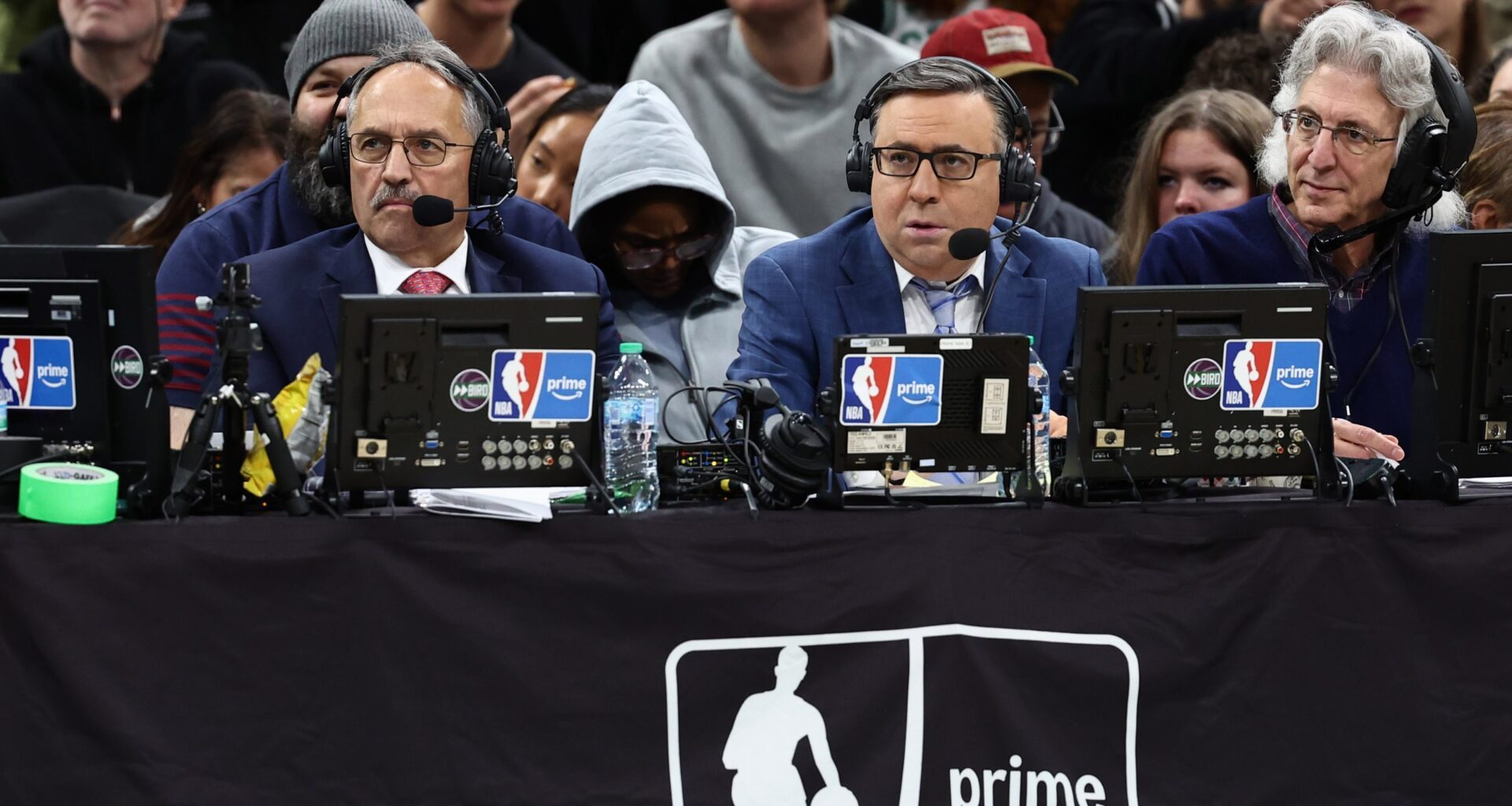
This season has included weekly primetime windows on broadcast network NBC and a new streaming-exclusive package on Amazon’s Prime Video, and though streaming viewership generally trails that of linear TV, Prime Video so far this season is down just three percent from last year’s equivalent windows.
While ESPN’s Tony Kornheiser dismissed the NBA Cup Final as not airing “on real TV” during an episode of “Pardon the Interruption” last week, the Knicks-Spurs game recorded more viewers on Prime Video (3.07M) than last year’s Bucks-Thunder final did on ABC (2.99M). Now that comes with a significant caveat, as it is official Nielsen policy to compare this year’s “Big Data + Panel” viewership to last year’s panel-only numbers (even though “Big Data + Panel” was being tracked, and in some cases publicized, before becoming the official currency in September).
It is a virtual lock that last year’s game had more viewers all things being equal, but it is no small feat that the Prime Video audience was even close enough to last year on ABC for methodology to matter. (Having the Knicks and Spurs rather than the Bucks and Thunder certainly helped.)
With more nationally televised games across more platforms, it may not be surprising to note that the league’s reach number — the total number of viewers who have watched at least one minute of NBA games this season — has increased far more than the average minute audience. The league said Monday that more than 87 million viewers had watched at least part of an NBA game this season, up 89% from last year.