
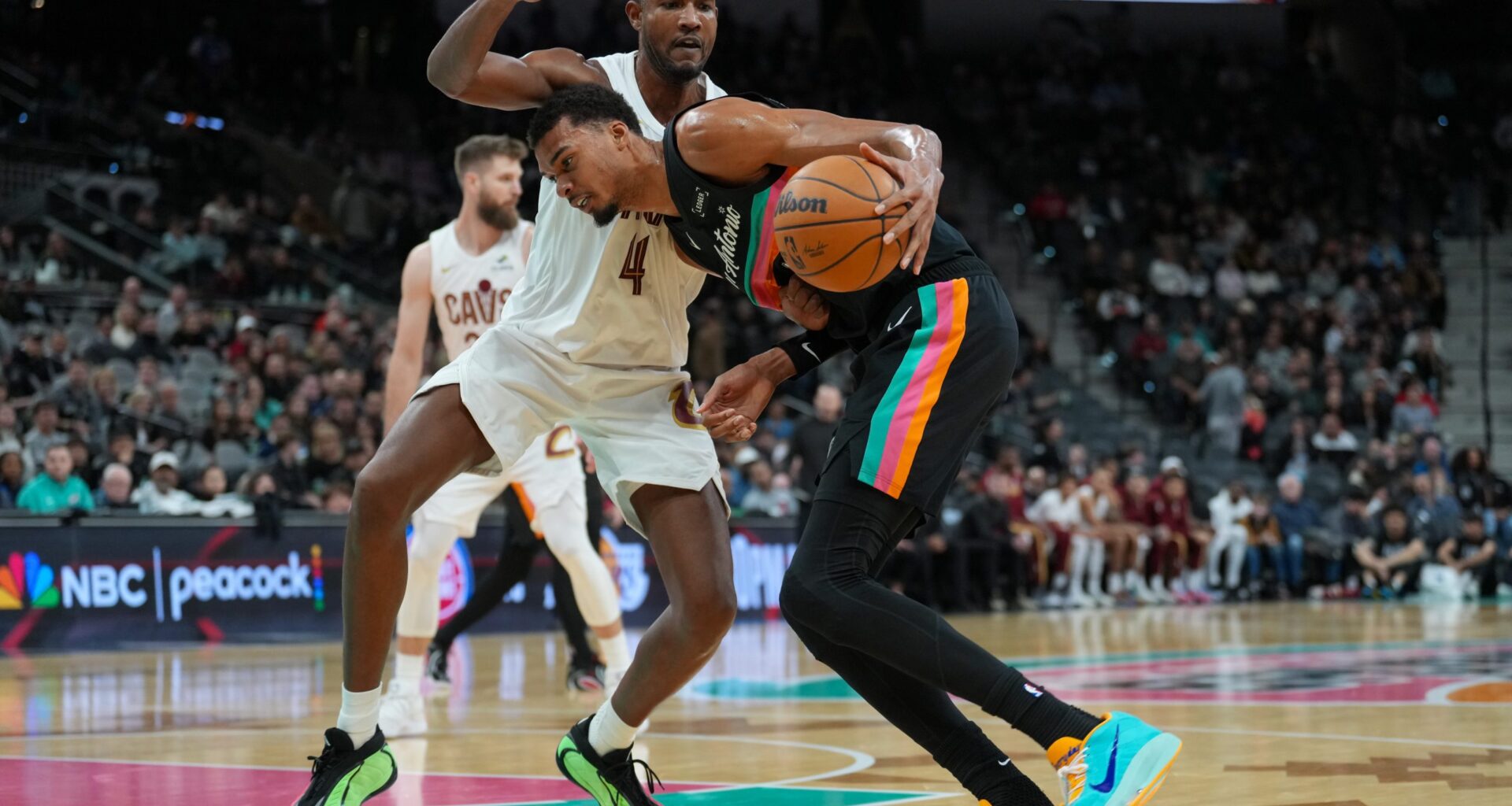
NBA viewership remains up double-digits entering the All-Star break, led by its linear TV partners.
NBA regular season games were averaging 1.80 million viewers across NBCUniversal, ESPN/ABC and Prime Video heading into the All-Star break, a figure that includes Adobe Analytics data for NBC games — up 16% from last year and the highest average at this point of the season since 2018. Including games on NBA TV, which is airing fewer games under the new media rights deal and thus drags down the average less than in past years, viewership is up 38%.
Keep in mind Nielsen has changed its methodology in the past year to expand its out-of-home viewing sample and shift to a new methodology that adds “Big Data” from smart TVs and set-top boxes to its traditional panel. Those changes would not fully explain a year-over-year increase of such size, but they will generally skew comparisons to prior years.
NBC, which is carrying NBA games for the first time since the 2001-02 season, is averaging 2.6 million per Nielsen and Adobe Analytics — up 97% from the comparable windows last year, which primarily aired on TNT. (Those averages do not include games that air exclusively on Peacock, which is not Nielsen rated.)
ESPN/ABC is averaging 2.06 million, up 18%. The networks own five of the ten largest audiences this season, all on Christmas Day — including the top three, Spurs-Thunder (6.71M), Cavaliers-Knicks (6.37M) and Mavericks-Warriors (6.11M).
Prime Video is averaging 1.06 million across its 44 games so far this season. For the windows that can be compared directly to last season — 30 total — the streamer is averaging 1.21 million, down 7%. The 14 other games have largely aired in windows that were not carried by one of the major networks last season (for example, a Thursday afternoon matinee between the Magic and Grizzlies in Berlin).
As is now typical for year one of a new streaming-exclusive package, the Prime Video audience is smaller, but younger-skewing, than that of its linear counterparts. Viewership is up in the key demographics of adults 18-34 (+3%), 18-49 (+12%) and 25-54 (+9%), and with those younger viewers making up a bigger portion of a smaller overall audience, the median age for Prime Video (46.9) is nearly nine years younger than the other NBA partners (55.3). (It should be noted that NBC’s streaming audience on Peacock, which presumably skews younger and might bring down that median age a bit, is not tracked by Nielsen.)
That trend extends into Prime’s “NBA Nightcap” postgame, which at an average of 479,000 viewers is down 5% from last year’s TNT broadcasts of “Inside the NBA” — but up in each of the young adult demos (+10% in 18-34, +6% in 18-49 and +2% in 25-54).
But streaming still cannot yet match the drawing power of linear television. Nine of the ten most-watched NBA game windows this season have not only aired on linear TV, but on over-the-air broadcast television — the five Christmas Day games on ABC (and ESPN), the two Opening Night games on NBC, and the premieres of NBC’s “Sunday Night Basketball” and “Coast 2 Coast Tuesday.” The lone exception was the NBA Cup Final on Prime Video.
Most-watched NBA games through All-Star break
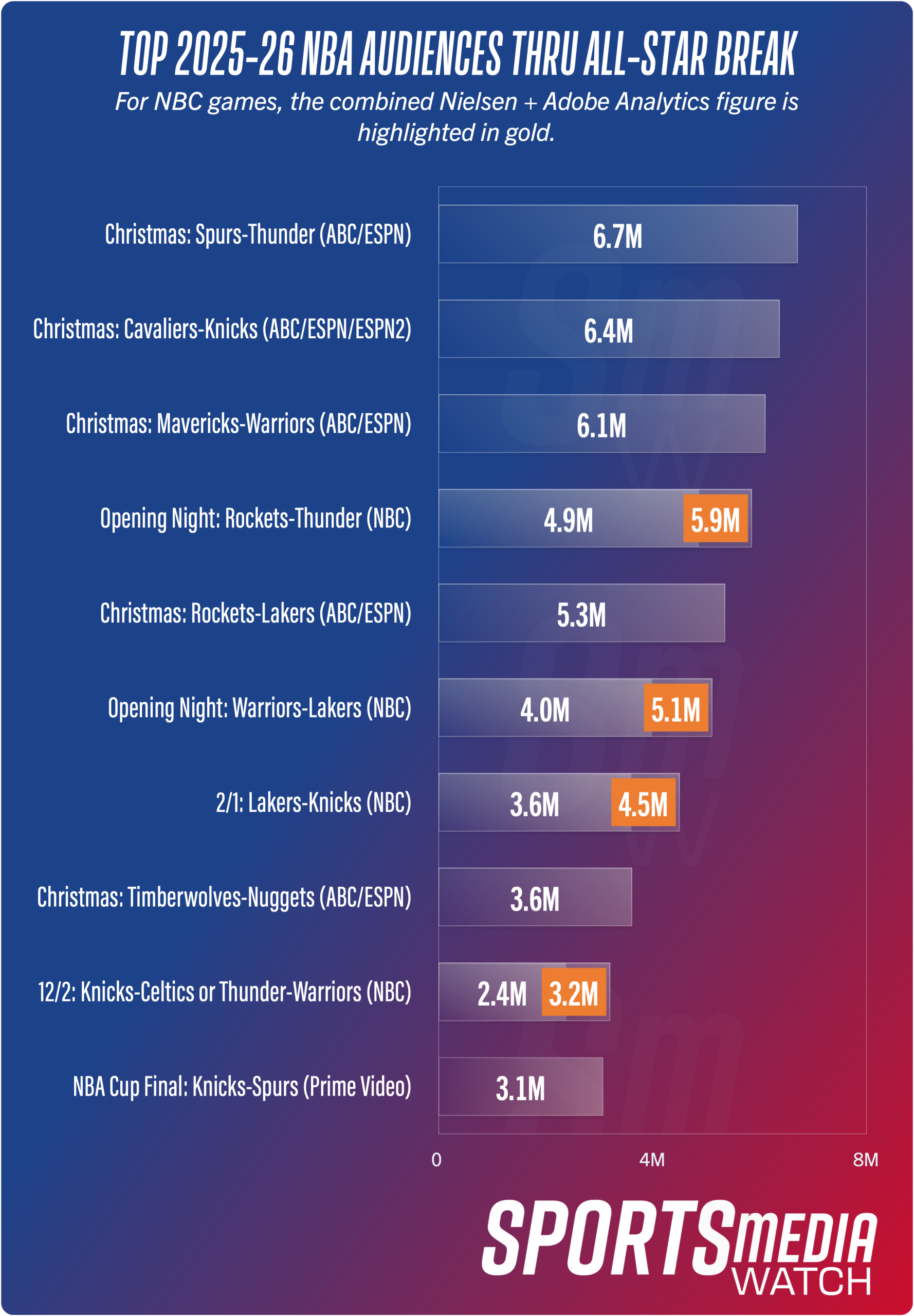 The ten most-watched 2025-26 NBA games through the All-Star break.
For as much has changed in the NBA with the new media rights deal, much remains the same. The top ten list at the end of last season also included the five Christmas games, the Opening Night doubleheader and the NBA Cup Final.
The NBA continues to see a far greater increase in reach than in its average minute audience. While average viewership is up 38% (with NBA TV included), reach — the number of viewers who watched at least one minute of any game — is up 87% to more than 138 million, the highest since 2011.